High-precision resin 3D printing engineered for smooth surface finishes, intricate design details, and crystal-clear transparent parts. Ideal for rapid functional testing and high-fidelity cosmetic prototypes.
✅ All Design Uploads Are Secure & Confidential
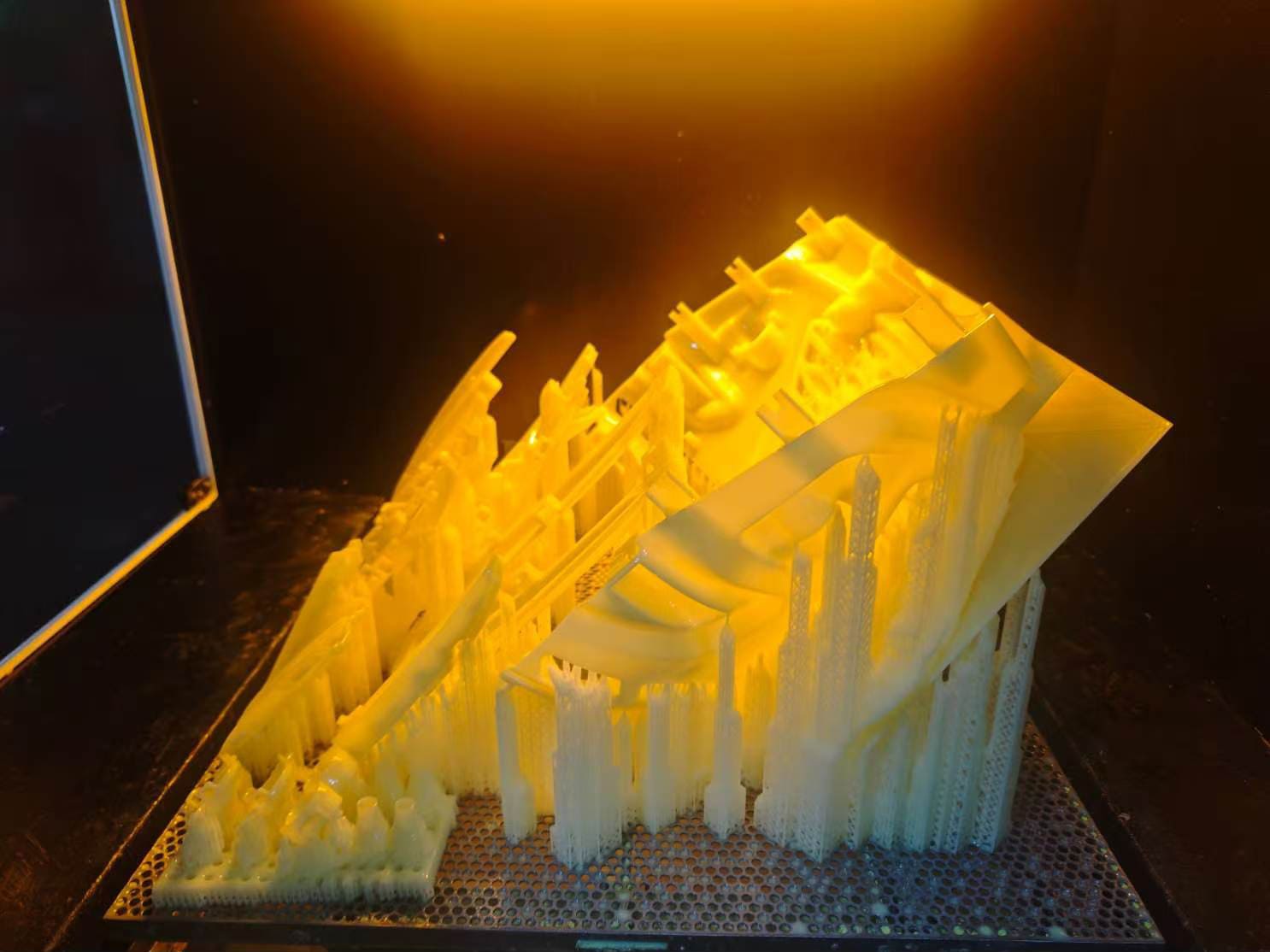
Stereolithography (SLA) is an industrial optical additive manufacturing process that converts liquid resin into solid, highly detailed 3D plastic components.
The process operates inside a liquid photopolymer vat controlled by a high-precision galvanometric UV laser. Guided by a 3D CAD model, the UV laser traces the exact cross-section of the component onto the resin surface, instantly solidifying (photopolymerizing) the liquid layer by layer. Once a layer is fully cured, the build platform lowers or raises by a precise height (typically 25 to 100 microns), and a sweeper blade coats a fresh layer of liquid resin across the vat.
Because the resin cures at a molecular level with micro-fine laser spot sizes, SLA produces the smoothest native surface finish and highest dimensional accuracy among all 3D printing technologies. It eliminates visible layer lines, making it the premier choice for master patterns, high-fidelity visual prototypes, crystal-clear optics, and intricate functional assemblies.
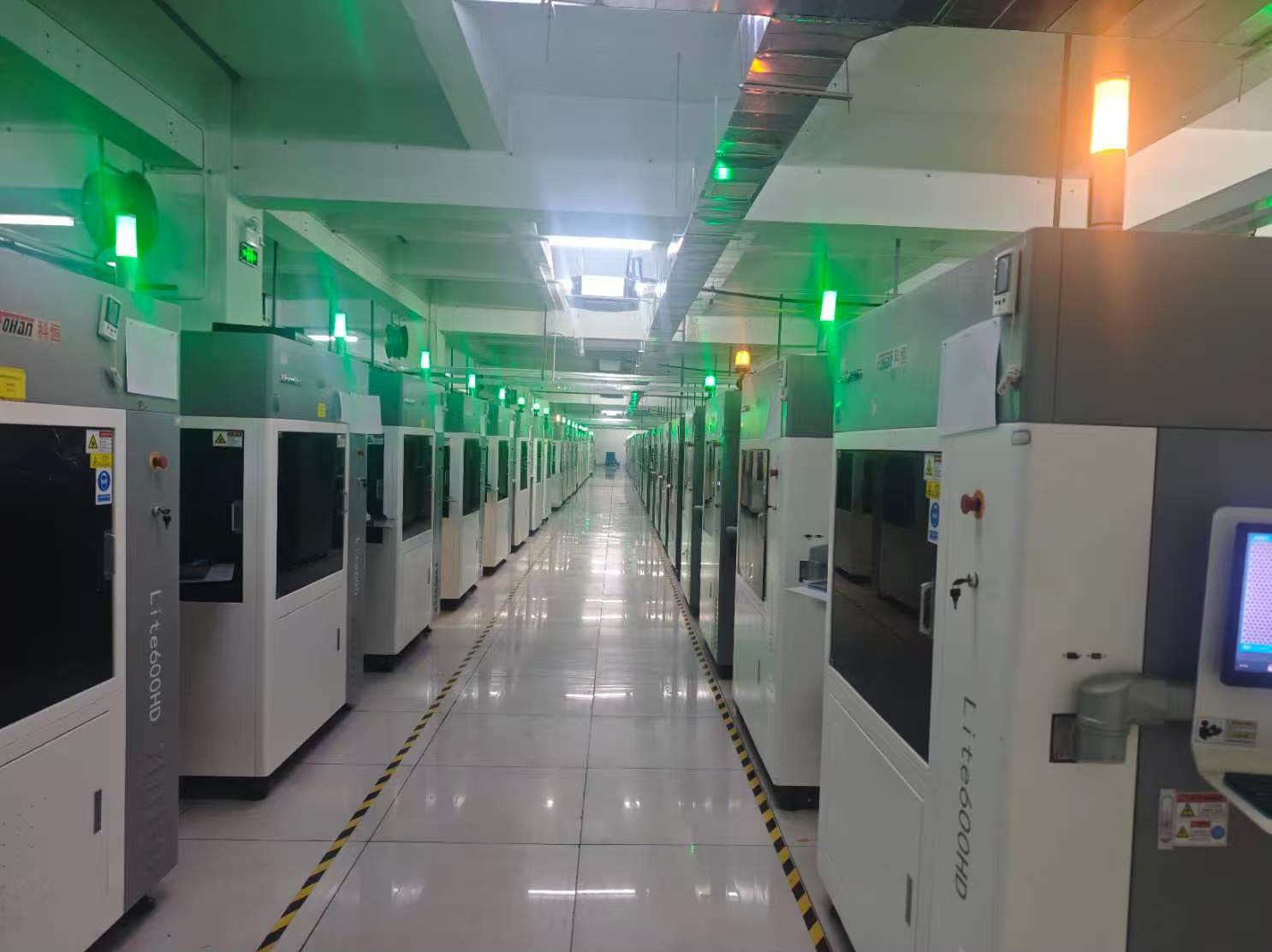
Select from our range of performance resins engineered for smooth surface finishes, high temperature stability, optical clarity, and fine feature detail.
Ideal for general assembly checks and visual prototypes, offering exceptional surface smoothness and high dimensional accuracy.
Designed for solid, sturdy components requiring high toughness, excellent temperature resistance, and a sleek dark aesthetic finish.
Engineered for demanding functional assemblies, providing superior thermal stability, elevated tensile strength, and impact durability.
Formulated specifically for components operating in high-heat environments, featuring outstanding thermal stability under stress.
Optimal for optical parts, fluid housings, and clear covers, delivering excellent water resistance and crystal-clear transparency post-polish.
Tailored for ultra-fine, intricate miniature components requiring razor-sharp edge definition, micro tolerances, and high heat resistance.
SLA delivers the smoothest native finish of any additive technology, eliminating visible layer lines to produce flawless visual prototypes ready for painting or polishing.
Micro-fine laser spots allow precise wall thicknesses down to 0.2mm and tight dimensional tolerances of ±0.1mm, ensuring exact fits for intricate functional assemblies.
Every CAD file undergoes a strict design for manufacturability review to optimize build orientation, minimize support structure touchpoints, and avoid resin trapping.
We enforce rigorous quality assurance across every batch, providing material data compliance, full UV post-curing verification, and dimensional inspection reports.
Combine stereolithography 3D printing with custom post-processing and hand-finishing to satisfy precise engineering tolerances and aesthetic cosmetic requirements.
Removes temporary support nubs and performs light hand-sanding to deliver a clean, uniform matte surface suitable for general fit checks.
Multi-stage fine wet-sanding cycles that eliminate microscopic layer boundaries, bringing external surfaces to a mirror-like high gloss.
Applies specialized transparent lacquers onto clear resin components, dramatically maximizing light transmission for optical-grade transparency.
Matches exact Pantone or RAL color codes to coat parts with durable matte, satin, or high-gloss finishes for production-look prototypes.
Shields cured photopolymer resin components against environmental sunlight exposure, preventing post-curing yellowing and material degradation.
Installs brass or stainless steel threaded inserts into pre-printed boss holes to provide durable metal threads for repeated mechanical assembly.
Data-backed engineering guidelines to optimize wall thickness, minimize support marks, and prevent suction-cup failures on hollow resin models.
Minimum wall thresholds: Maintain a minimum wall thickness of 0.6mm for supported structures and 1.0mm for unsupported walls to prevent bending during UV post-curing.
Control resin shrinkage: Photopolymer resins shrink 1.5%–2.5% during cross-linking. Adding structural ribs to large flat areas eliminates thermal warping and maintains dimensional accuracy.
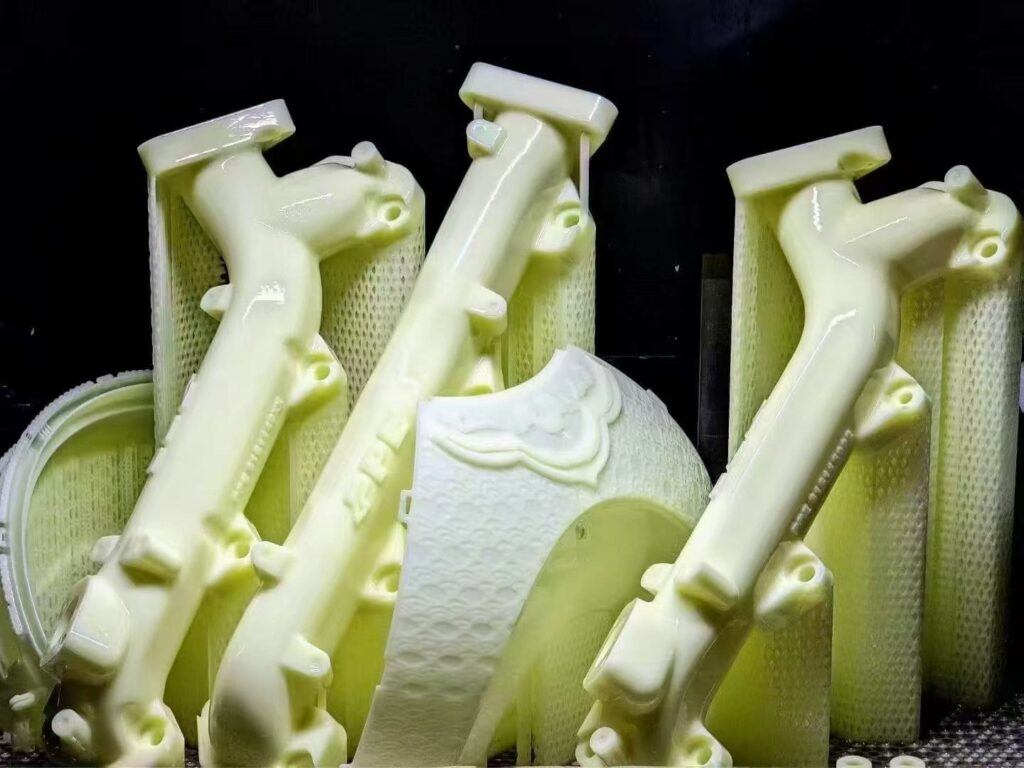
Reduce support footprint: Incline components between 15° and 45° relative to the build platform to reduce support contact area by over 60% compared to flat placement.
Protect cosmetic surfaces: Orient critical aesthetic and sealing surfaces downward away from support touchpoints (0.3mm–0.8mm contact tips), minimizing manual post-sanding labor.
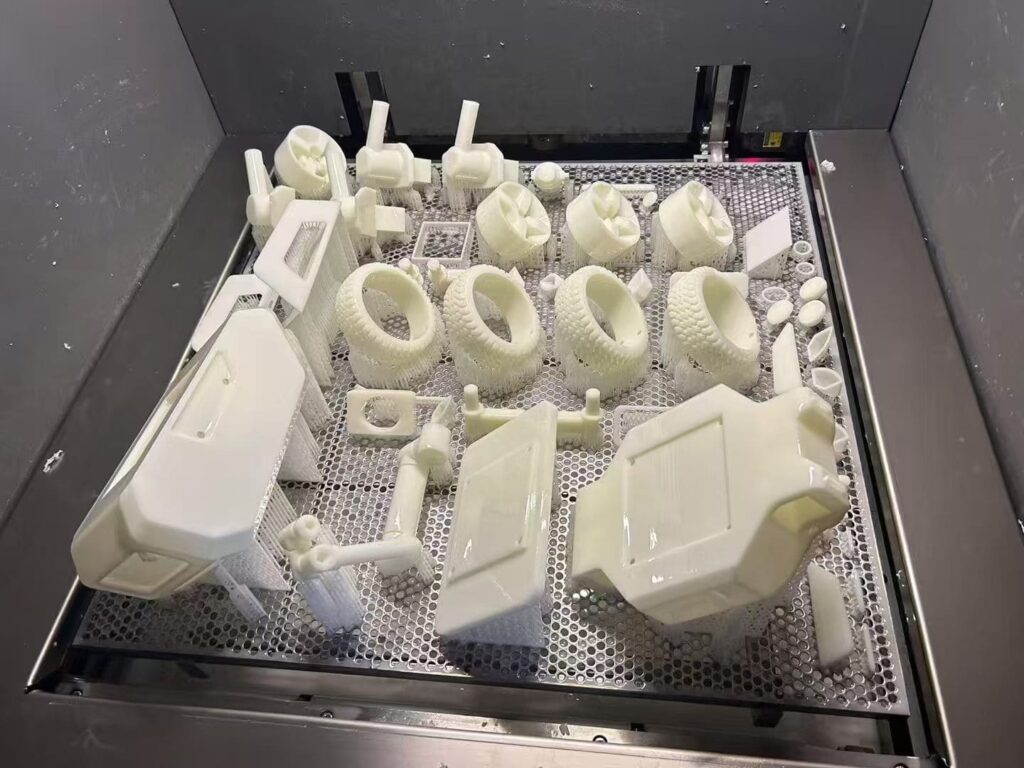
Save material costs: Hollowing solid geometries with a 2.0mm wall offset reduces photopolymer resin consumption and part costs by 40%–70%.
Prevent suction cup effect: Incorporate at least two 3.5mm drainage/air vent holes on opposite sides of hollow models to prevent liquid trapping and peel-stress delamination.
Standard SLA prototype orders ship within 3 to 5 working days. For bulk volume orders or projects requiring custom post-finishing (such as hand polishing or custom painting), lead time is typically 5 to 7 working days.
Native transparent resin is translucent post-print. With our multi-stage hand sanding, wet polishing, and optical clear coating, parts can achieve near-glass optical transparency, perfect for lenses and fluid visualization.
Standard SLA printing tolerances are typically ±0.1mm (or ±0.005 mm/mm, whichever is greater). For critical mating features, precision post-machining or hand fitting can be performed to meet tighter engineering fits.
Yes. While standard resins are ideal for visual models, engineering-grade resins (such as Tough ABS-like, High-Temp, or Flexible resins) offer superior impact strength and thermal resistance for functional fit checks and snap-fits.
Drainage holes (minimum 3.5mm diameter) allow uncured liquid resin to escape from inside the cavity and equalize internal pressure during printing, preventing structural cracking, delamination, and resin trapping.
Once we receive your design files, our senior manufacturing engineers will manually perform a comprehensive DFM review and deliver an accurate, optimized quote within 24 hours.