High-density, production-grade metal components engineered with advanced Selective Laser Melting (SLM). From intricate functional prototypes to high-performance aerospace and industrial end-use parts, Tenghui delivers extreme mechanical strength and precision.
✅ All Design Uploads Are Secure & Confidential
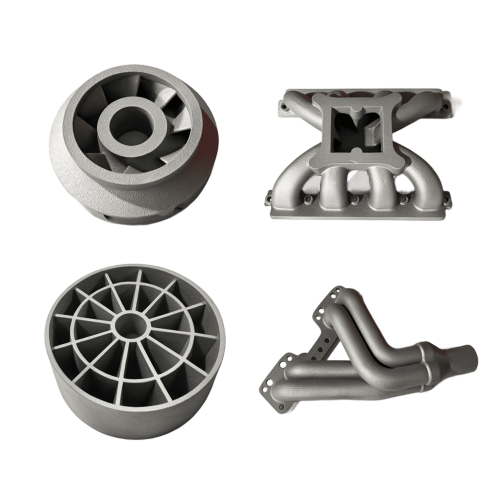
Selective Laser Melting (SLM)—also known as Direct Metal Laser Sintering (DMLS) or Laser Powder Bed Fusion (PBF-L)—is an advanced industrial additive manufacturing technology that builds fully dense metal components directly from 3D CAD models.
The process operates inside a sealed chamber filled with inert gas (such as argon or nitrogen) to prevent oxidation. A high-power fiber laser selectively scans and completely melts micro-scale metal powders layer by layer. Unlike traditional sintering methods that merely bind particles together, SLM achieves total thermal fusion of the metal, resulting in near-zero porosity (up to 99.9% relative density) and mechanical performance comparable to—or exceeding—traditionally forged materials.
This technology removes the geometric boundaries of conventional CNC machining and tooling. It allows engineers to design and manufacture highly intricate internal cooling channels, lightweight topology-optimized structures, and consolidated single-piece assemblies, dramatically shortening production cycles and reducing material waste.
• Standard Lead Time: 5 – 7 working days
• Standard Tolerances: ±0.3% (with a lower limit of ±0.2mm ~ ±0.3mm)
• Minimum Feature Size: 0.5mm
• Layer Thickness: 20 – 50 μm
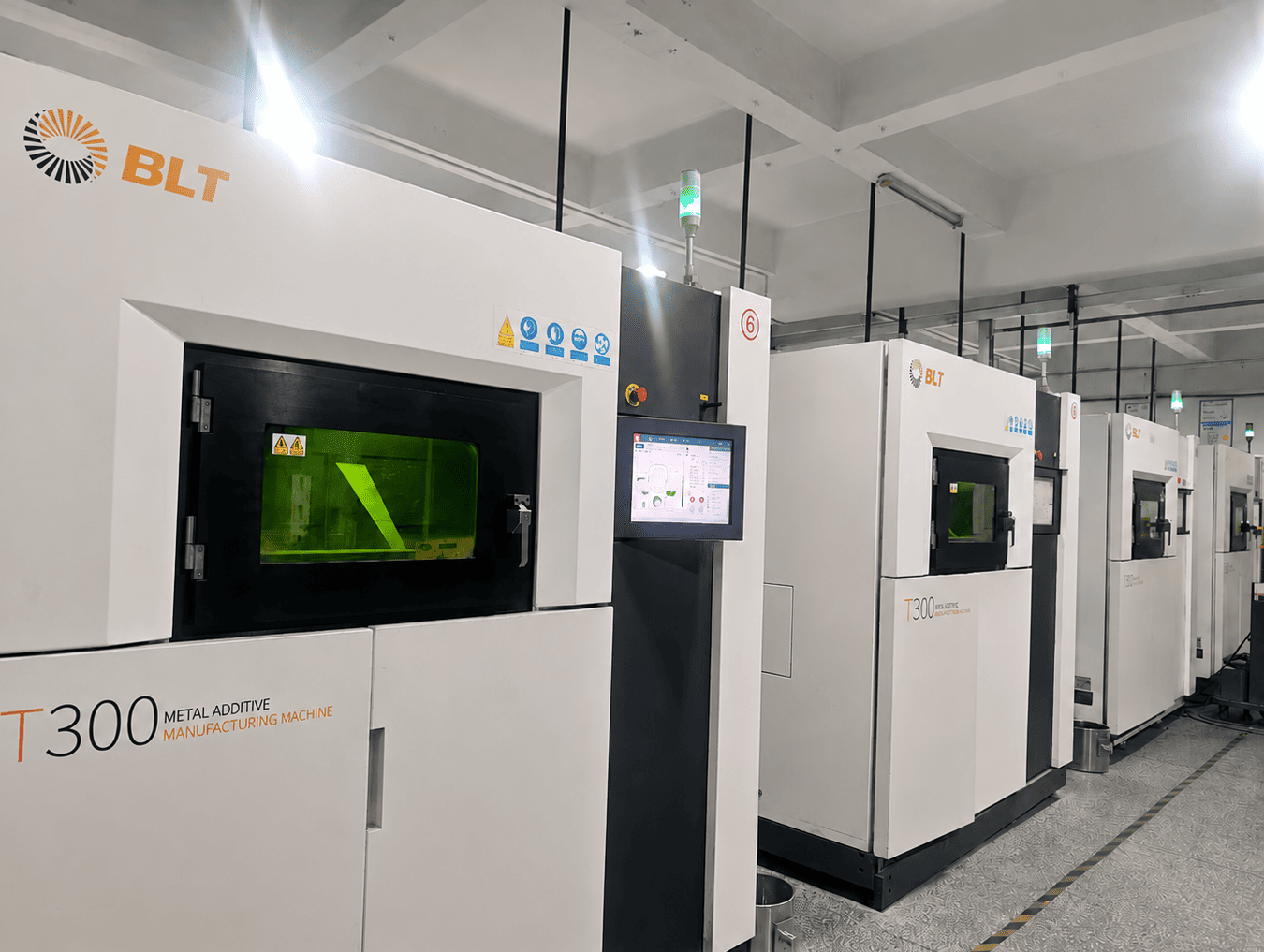
Select from our wide range of high-performance engineering alloys optimized for density, strength, and harsh thermal environments.
Lightweight engineering choice offering excellent fluid mechanics, superior thermal conductivity, and optimal structural strength for automotive and aerospace components.
Provides magnificent chemical corrosion resistance, exceptional mechanical ductility, and high toughness, making it perfect for marine equipment and medical devices.
Engineered specifically for heavy mechanical mold manufacturing, delivering supreme material hardness, anti-fatigue performance, and thermal stability.
Features an outstanding strength-to-weight ratio and superb biological compatibility, widely selected for orthopedic implants, surgical guides, and aerospace parts.
Offers an extremely high melting point, extreme density, and superior hardness, optimal for specialized radiation shielding and high-temperature defense applications.
Delivers exceptional electrical and thermal conductivity, commonly utilized in advanced aerospace heat exchangers and custom telecommunication housings.
Our calibrated SLM parameters achieve over 99.5% part density, delivering tensile strength and fatigue resistance that rival traditional metal forging.
For critical mating surfaces, bearing seats, and threaded holes, our secondary in-house CNC machining achieves razor-sharp tolerances down to ±0.02mm.
Every CAD file undergoes a strict design for manufacturability (DFM) review to optimize support structures, dissipate thermal stress, and minimize material waste.
We enforce rigorous quality assurance, providing material batch certification, coordinate measuring machine (CMM) dimensional reports, and first-article inspections.
Combine additive manufacturing with custom surface treatments and advanced thermal post-processing to satisfy precise engineering tolerances and aesthetic requirements.
Sprays fine abrasive media onto the part surface to eliminate support residue and deliver a clean, uniform matte metal finish.
Precision hand-finishing cycles that smooth out layer boundaries and bring external features to a high-gloss or mirror-like shine.
Applies functional outer coatings (such as Zinc or Nickel) to dramatically boost surface wear resistance and chemical corrosion protection.
Combines additive printing with subtractive CNC milling to meet tight engineering tolerances and generate ultra-smooth critical sealing faces.
Controlled heat treatment inside vacuum furnaces to eliminate internal residual stresses and prevent part deformation post-printing.
Advanced high-pressure thermal processing that eliminates internal micro-porosity, optimizing structural fatigue life for critical flight parts.
Practical engineering tips to reduce costs, ensure tight tolerances, and maximize strength.
Keep angles above 45°: Avoid heavy support structures, cutting raw material waste and hand labor.
Use lattice infills: Replace solid cores with lightened lattice structures and 3mm powder escape holes.
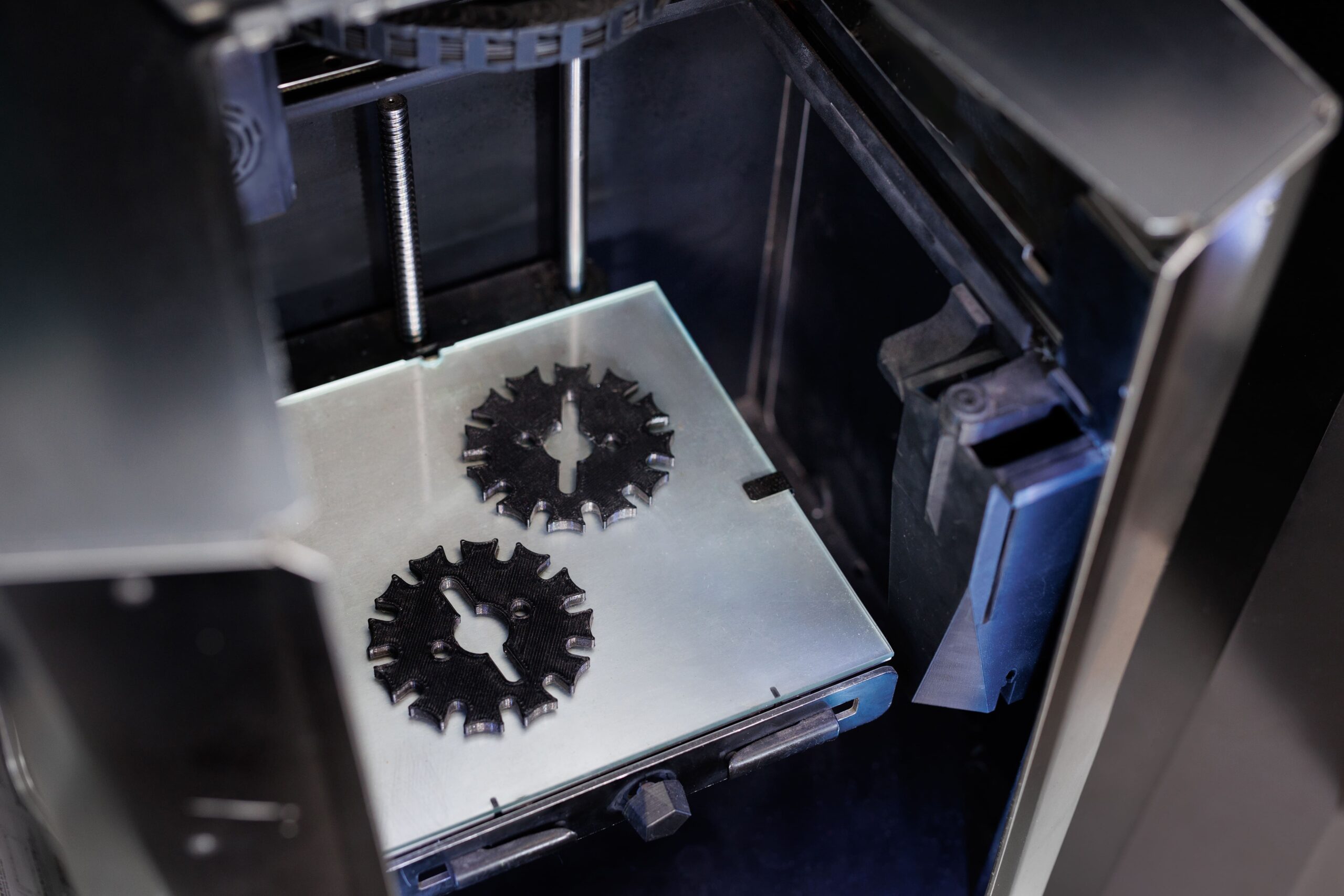
Add machining allowance: Leave $0.5\sim1.0\text{mm}$ extra stock on critical faces to CNC finish down to $\pm0.02\text{mm}$.
Design datum tabs: Add flat alignment tabs to ensure fast, repeatable CNC fixture setups post-printing.
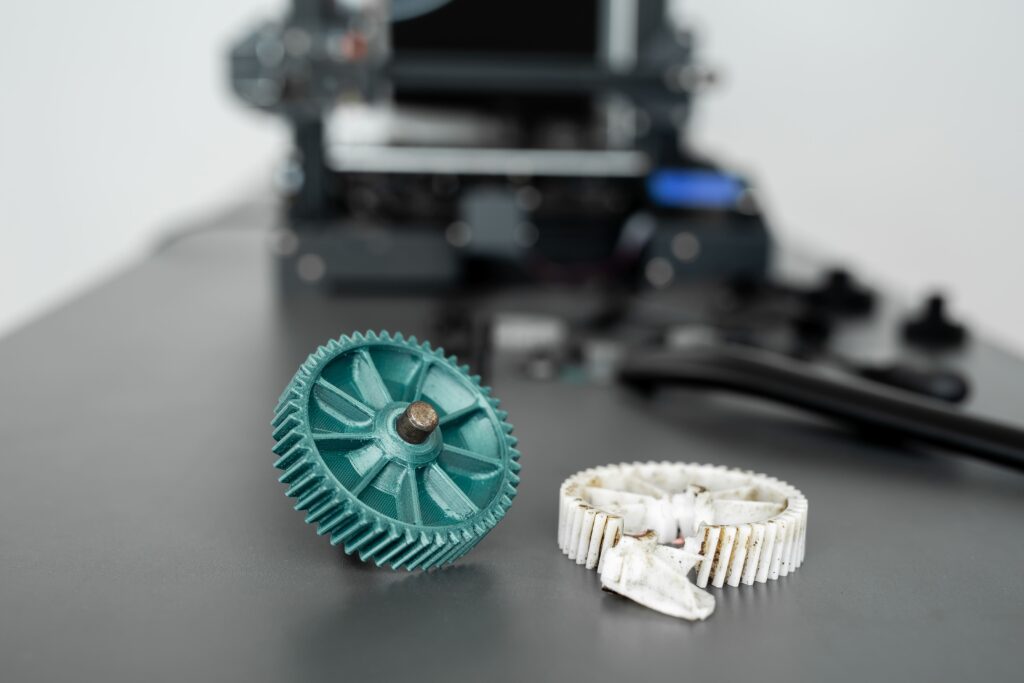
Vacuum stress relieving: Furnace-heat printed parts before plate cutting to prevent dimensional warping.
Hot isostatic pressing (HIP): Eliminate micro-porosity to achieve >99.5% part density and near-forge fatigue strength.
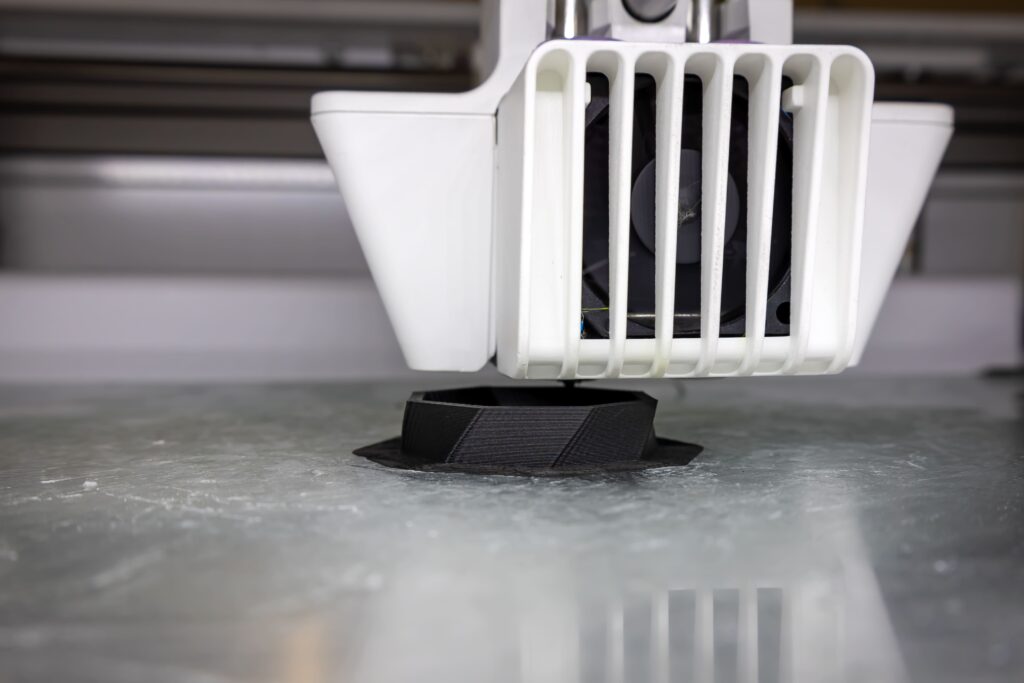
Under computer control, a high-powered laser selectively irradiates designated areas of metal powder to melt and fuse them layer by layer. The liquid metal rapidly cools and solidifies. After each layer is complete, the build platform lowers by one layer's thickness, and a wiper blade coats a fresh layer of fine metal powder over the platform. This process repeats until the full 3D component is formed.
As-printed tolerances are typically ±0.1mm to ±0.2mm. For critical sealing surfaces or bearing fits, secondary CNC machining achieves tight tolerances down to ±0.02 mm.
Supports anchor the part to the build plate, dissipate severe laser heat, and prevent thermal warping during rapid melting and cooling cycles.
Our calibrated SLM processes achieve over 99.5% relative density, delivering mechanical strength and fatigue resistance comparable to traditional forged alloys.
Yes. SLM excels at complex internal geometries like conformal cooling channels. Hollow structures simply require 3mm escape holes to remove un-melted powder post-print.
Once we receive your design files, our senior manufacturing engineers will manually perform a comprehensive DFM review and deliver an accurate, optimized quote within 24 hours.