Skip to content
In-house CNC milling and turning for development parts, housings, brackets, adapters, and test fixtures.
TENGHUI supports prototypes and low-to-medium volume orders. Project suitability is reviewed against the intended use, drawings, material specifications, quality requirements, and documentation.
We support engineering teams with custom parts for design evaluation, assembly trials, tooling, and ground-based testing. Manufacturing scope and acceptance requirements are confirmed before order acceptance.
Production and inspection are managed against approved drawings and order requirements. Additional aerospace qualifications must be reviewed separately.
Milled and turned metal and plastic parts, from individual prototypes to repeat orders.
We assess tool access, wall thickness, workholding, tolerances, and finishing allowances. Manufacturing concerns are submitted for approval before production.
Material grade, condition, product form, availability, and required documentation are confirmed during quotation.
Finishing and heat treatment are evaluated against the specified process, supplier requirements, and final dimensions.
Straightforward CNC prototypes can often be completed in 3–7 working days. Special materials, documentation, finishing, and inspection may require additional time.
TENGHUI manufactures custom parts for development builds, assembly evaluation, test equipment, and tooling.
The intended use must be identified at the inquiry stage. An appearance model, ground-test fixture, and installed aircraft component can have substantially different manufacturing and qualification requirements.

Typical projects include prototype housings, mounting brackets, adapters, spacers, and fixture components made to customer drawings.
Key requirements we review include:
In-house CNC machining, supported by sheet metal fabrication, rapid prototyping, and coordinated finishing.

Milled and turned parts with specified locating, mounting, and mating features. Feasibility depends on geometry, material, workholding, and inspection access.
Explore CNC Machining
Cut, bent, and assembled brackets, panels, covers, and enclosures. Material, welds, hardware, and final dimensions are reviewed before production.
Explore Sheet Metal
Machined and 3D-printed parts for appearance, fit, and assembly evaluation. Prototype materials and processes are selected according to the intended test.
Explore Rapid Prototyping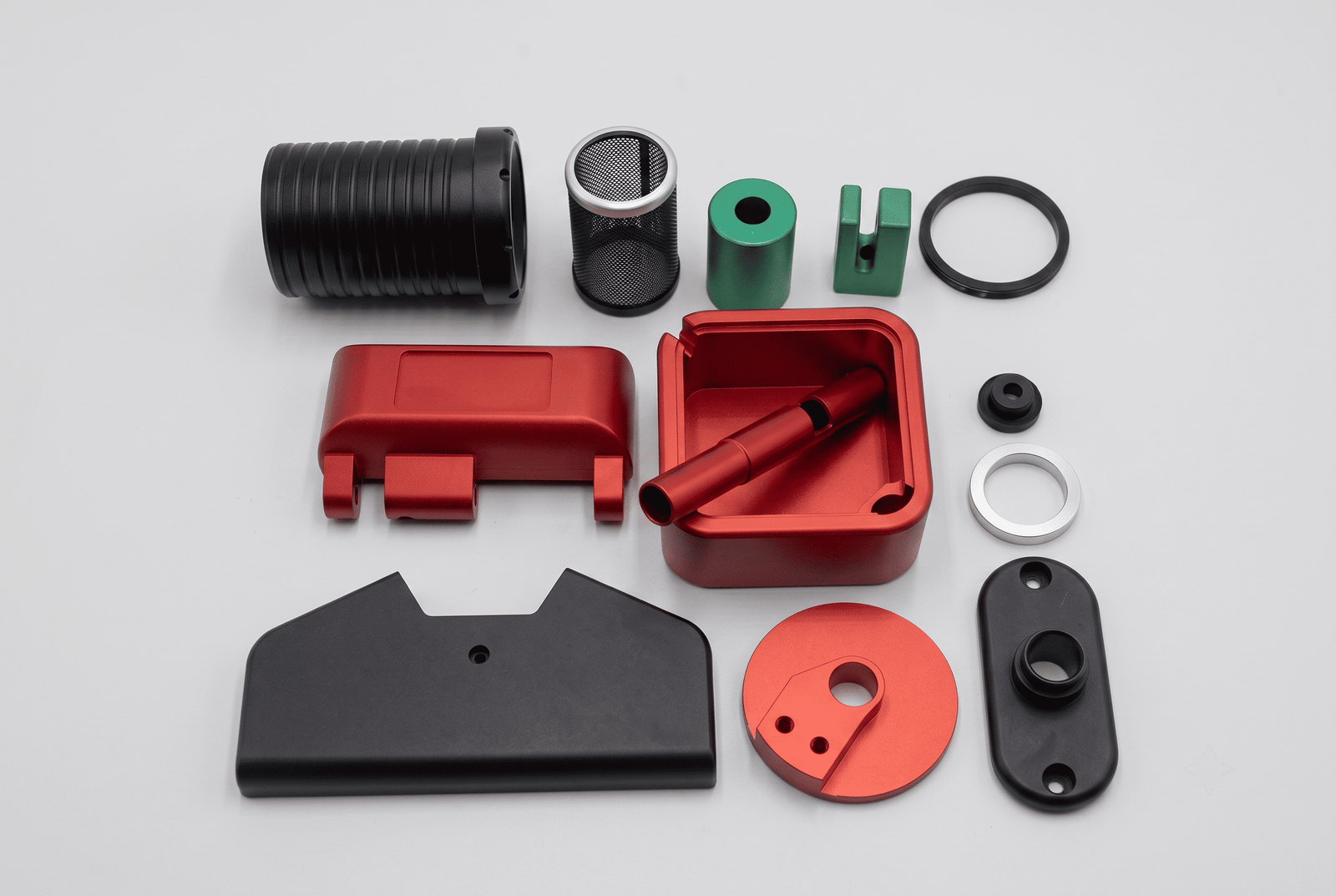
Anodizing, passivation, plating, and painting can be evaluated where suitable. Required specifications, processing sources, certificates, and acceptance tests must be confirmed before quotation.
Explore FinishingMaterial selection follows the drawing and intended use. A common alloy designation alone does not establish compliance with a particular aerospace material specification.
| Material | Selection Notes | Typical Development & Tooling Parts |
|---|---|---|
| Aluminum 6061 | A common option for lightweight machined parts; condition and finish requirements must be specified. | Housings, adapters, brackets, and fixture plates. |
| Aluminum 7075 | Considered where higher strength is required; material condition, corrosion exposure, and joining methods need review. | Loaded prototype components, supports, and tooling. |
| Stainless Steel 304 / 316L | Selected according to corrosion exposure, loading, and surface requirements. | Hardware, spacers, shafts, and test-equipment components. |
| Carbon & Alloy Steel | Grade and supply condition selected for strength, wear, welding, or heat treatment requirements. | Fixture bases, pins, locating blocks, and tooling. |
| POM / Acetal | Useful for selected locating and sliding functions; creep and temperature require consideration. | Guides, bushings, spacers, and assembly aids. |
| Nylon / PA | Offers useful toughness; moisture can affect dimensions and mechanical performance. | Protective components, guides, and prototypes. |
| ABS / PC / PMMA | Selected according to appearance, toughness, transparency, and test requirements. | Covers, visual models, and fit-check parts. |
Specified brands, additional alloys, and specialized material requirements are reviewed individually. Substitutions require approval.
Explore our portfolio of precision-machined prototypes and high-durability components manufactured for global commercial aerospace innovators.


TENGHUI holds ISO 9001:2015 certification.
If your project requires AS9100 certification, customer approval, or other qualifications, identify these requirements before requesting a quotation. We will review whether the project is within our accepted scope.
Our focus is development parts, assembly models, tooling, and ground-test equipment components.
Other parts require review of their intended use, drawings, material specifications, processing requirements, and supplier qualifications before order acceptance.
Documentation and traceability requirements are reviewed before material procurement.
Please specify the required material report, applicable standard, batch identification, and record requirements. Availability depends on the material source and agreed procurement route.
We do not assume that generic stock documentation meets every project specification.
Selected CNC-machined metal features can achieve tolerances as tight as ±0.01 mm, subject to engineering review.
Fits and geometric requirements are assessed by feature, material, geometry, and finishing process. Plastic parts require separate consideration of temperature, moisture, and deformation.
Inspection coverage, measurement methods, and report format are agreed before production.
First-part inspection and dimensional reports can be discussed during quotation.
If AS9102 documentation or a customer-specific approval package is required, submit the complete requirements for capability review. A standard dimensional report should not be assumed equivalent to a complete aerospace first article submission.
We can review thin walls, pockets, ribs, and other weight-reduction features for machining feasibility.
DFM feedback addresses tool access, support, distortion, and inspection. It does not replace structural analysis or establish strength, fatigue life, or flight suitability.
Design changes require customer approval.
Suitable processes are reviewed against the material, drawing, and project specifications.
Include required standards, revisions, approved-source restrictions, testing, and certificates. Standard commercial processing should not be assumed to meet a specified aerospace process requirement.
Coating allowances, masking, distortion, and final dimensions are considered in the manufacturing plan.
Repeat orders follow the confirmed drawing revision, material, process, and inspection requirements.
Changes affecting manufacturing or acceptance are reviewed before proceeding. Customer approval points and record-retention requirements should be agreed at the quotation stage.
Straightforward CNC prototypes can often be completed in 3–7 working days.
Special material procurement, approval steps, finishing, testing, and documentation can extend the schedule. Delivery is confirmed after reviewing the complete project requirements.
Please provide:
Upload your 2D drawings (PDF/DWG/DXF) and 3D CAD files (STEP/IGES). We evaluate part geometry, materials, and tolerances within 24 hours.
Once we receive your design files, our senior manufacturing engineers will manually perform a comprehensive DFM review and deliver an accurate, optimized quote within 24 hours.