TENGHUI provides custom fiber laser cutting services for precision sheet metal parts, from one-off prototypes to production runs. Our CNC-controlled fiber laser systems deliver accurate dimensions, intricate geometries, and clean, consistent cut edges, with lead times as fast as 3 business days.
Our laser cutting service is dedicated exclusively to metal sheet materials.
✅ All Design Uploads Are Secure & Confidential
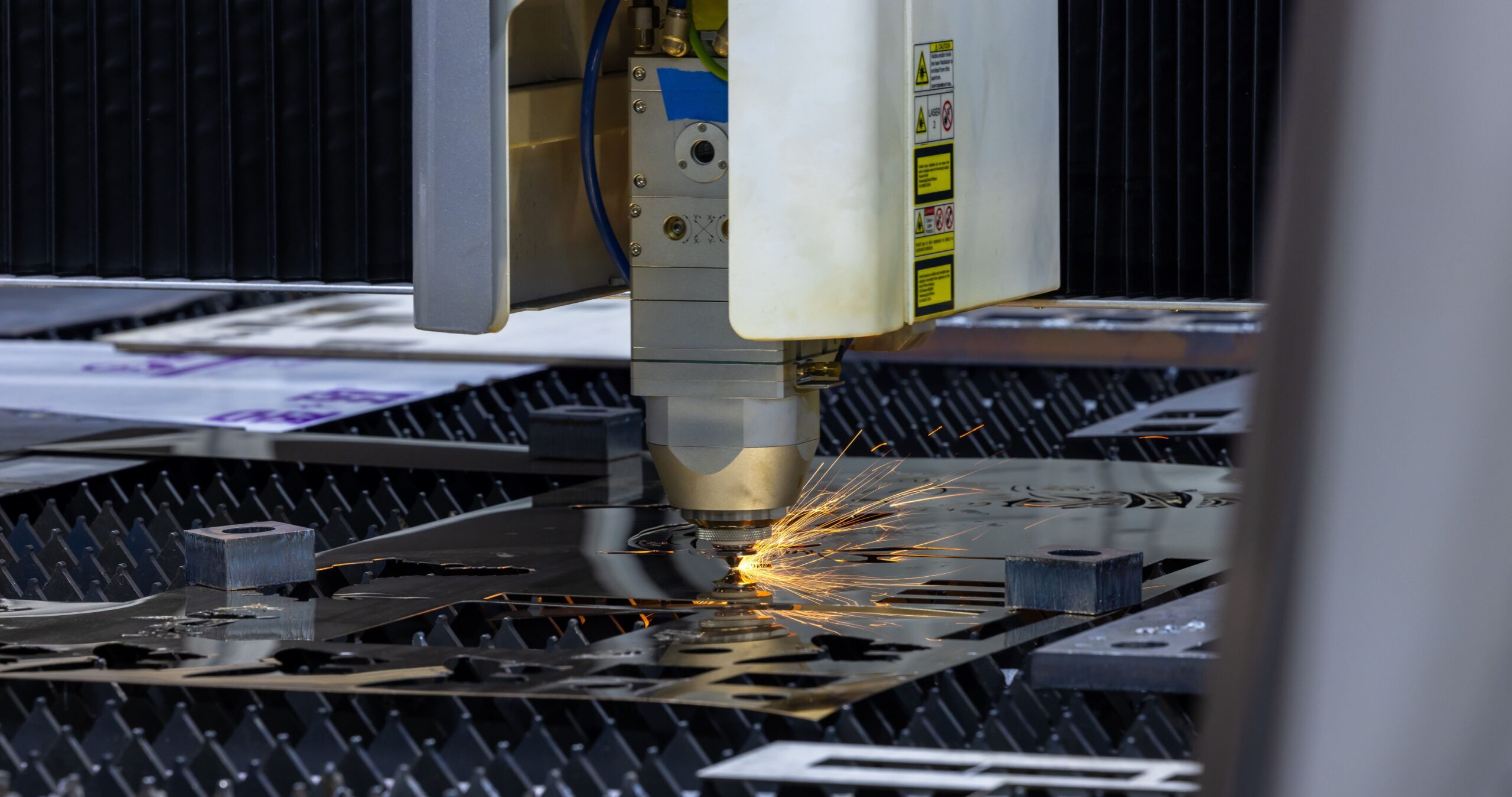
Our fiber laser cutting systems combine cutting speed, dimensional accuracy, and production flexibility. Parts are cut directly from CAD data without dedicated cutting dies, making the process suitable for prototypes, design revisions, and repeatable production orders.
Produce accurate external profiles, holes, slots, cutouts, and intricate 2D geometric features with high repeatability and clean edge quality.
Fiber laser technology efficiently cuts reflective materials like aluminum, copper, and brass, as well as stainless steel, carbon steel, galvanized sheet, and titanium.
Direct-from-CAD digital CNC programming makes it seamless to cut one-off prototypes, rapidly iterate design revisions, and scale to repeat batch production.
Maximum cutting thickness depends on the material grade, part geometry, feature size, overall dimensions, and required edge quality.
CNC-controlled laser cutting produces accurate profiles and precise feature locations for standard-sized precision sheet metal parts.
Parts are cut directly from digital CAD data, reducing tooling costs and making design revisions faster and more economical.
Laser cutting produces detailed contours, holes, slots, cutouts, and small internal radii that may be difficult to achieve using conventional methods.
A concentrated laser beam and optimized cutting paths limit heat input and help reduce distortion in thin metal sheets.
CNC nesting arranges multiple parts efficiently across the metal sheet, helping reduce material waste and production costs.
Digital cutting programs and controlled process parameters help maintain consistent dimensions across prototypes and repeat production batches.
For standard-sized metal parts with conventional material thicknesses, TENGHUI can typically maintain a laser-cutting dimensional tolerance of ±0.1 mm.
Long cutting lengths, large overall dimensions, thick plates, and very small features may require wider tolerances. Material flatness, heat accumulation, cutting kerf, and part geometry can all affect final dimensional accuracy. Achievable tolerances are confirmed after reviewing the material specification and technical drawings.
For standard-sized metal parts with conventional sheet thicknesses, TENGHUI maintains a precision dimensional tolerance of ±0.1 mm. Extended lengths, thick plates, thermal accumulation, and micro features are confirmed following drawing and material specification review.
| Laser-Cut Feature | Typical Capability | Important Considerations |
|---|---|---|
| General Cut Dimensions | ±0.1 mm | Standard-sized parts with conventional material thicknesses. |
| Hole Diameter & Position | ±0.1 mm | Applies when the hole meets recommended minimum size rules. |
| Long or Large Parts | Review Required | Overall dimensions and stock sheet flatness may affect accuracy. |
| Thick Metal Plates | Review Required | Material thickness and heat input influence dimensions and edge taper. |
| Small / Closely Spaced Features | Review Required | Heat accumulation and cutting kerf width may limit achievable limits. |
| Design Feature | Recommended Minimum | Important Considerations |
|---|---|---|
| Hole Diameter | ≈ 1× Thickness | Smaller holes may experience edge taper, distortion, or dross buildup. |
| Slot Width | ≈ 1–1.5× Thickness | Capability depends on specific alloy grade, thickness, and required edge finish. |
| Internal Corner Radius | ≥ Laser Kerf Radius | Perfectly square internal 90° corners cannot be cut directly by laser beams. |
We review the material, thickness, dimensions, tolerances, quantities, and critical features specified in your CAD files and technical drawings.
The part geometry is converted into an optimized cutting program. Multiple parts are nested on the sheet to improve material utilization and cutting efficiency.
Laser power, cutting speed, focus position, and assist gas are selected according to the material type, thickness, and required edge quality.
Parts are laser cut according to the approved program. Key dimensions, hole locations, profiles, and quantities are checked before delivery.
The minimum laser-cut hole diameter should be approximately equal to or greater than the material thickness. Smaller holes may experience distortion, taper, or dross buildup.
Slot widths should typically be at least 1 to 1.5 times the material thickness. Narrower slots require a technical review based on specific material grades.
Internal corners naturally feature a small radius defined by the laser beam kerf. Add suitable corner reliefs when mating assemblies require square internal corners.
Long, narrow components are sensitive to heat distortion and stock flatness. Broader dimensional tolerances may be necessary to ensure structural integrity.
Features positioned very close together can cause localized heat concentration. Adequate spacing helps maintain strict dimensional accuracy and edge quality.
Provide a 3D STEP/STP file along with a dimensioned PDF, DWG, or DXF drawing. Clearly specify material grades, thicknesses, quantities, and tolerance demands.
For standard-sized metal parts with conventional material thicknesses, our typical laser-cutting tolerance is ±0.1 mm. Long parts, large dimensions, thick plates, and very small features may require wider tolerances. Final tolerances are confirmed after reviewing the drawings and material requirements.
Our in-house fiber laser cutting service is dedicated to metal sheet materials. For non-metal materials such as acrylic, wood, and certain plastics or rubber materials, we can arrange laser cutting through qualified manufacturing partners. Material compatibility, tolerances, lead time, and pricing are confirmed after project review.
As a general guideline, the minimum hole diameter should be approximately equal to or greater than the material thickness. The recommended minimum slot width is approximately 1–1.5 times the material thickness. Smaller features require engineering review.
No. Laser-cut internal corners naturally have a small radius determined by the laser beam and cutting kerf. When mating parts require square corners, suitable corner reliefs or additional clearance should be included in the design.
We control heat input through optimized laser parameters, cutting sequences, feature spacing, lead-in positions, and nesting layouts. Thin sheets, closely spaced features, and long narrow parts are more sensitive to thermal distortion.
Nitrogen is commonly used for stainless steel, aluminum, copper, and brass to reduce edge oxidation and produce a cleaner cut surface. Oxygen may be used for thicker carbon steel to improve cutting efficiency, but it can leave an oxide layer on the cut edge
We laser cut carbon steel, galvanized steel, stainless steel, aluminum, copper, brass, and titanium. Available cutting thickness and achievable edge quality depend on the material grade, part geometry, and technical requirements.
It depends on the material, thickness, assist gas, and required edge quality. Thin materials often have clean edges after cutting, while thicker plates may have minor dross or burrs. Specific cosmetic or edge-quality requirements should be identified on the drawing.
No. Laser cutting produces through-cut two-dimensional features. Functional threads, precision countersinks, counterbores, and blind holes require separate machining operations and should be clearly specified on the technical drawing.
We recommend providing a STEP or STP file together with a dimensioned PDF, DXF, or DWG drawing. Please specify the material grade, sheet thickness, quantity, dimensional tolerances, critical dimensions, inspection datums, and required edge condition.
Request a Quote for Custom Laser-Cut Metal Parts
Once we receive your design files, our senior manufacturing engineers will manually perform a comprehensive DFM review and deliver an accurate, optimized quote within 24 hours.