Precision stainless steel components via CNC Machining, Sheet Metal Fabrication, and Metal 3D Printing (SLM). Delivering extreme corrosion resistance, high tensile strength, and tight tolerances down to ±0.01 mm for demanding applications.
✅ All Design Uploads Are Secure & Confidential
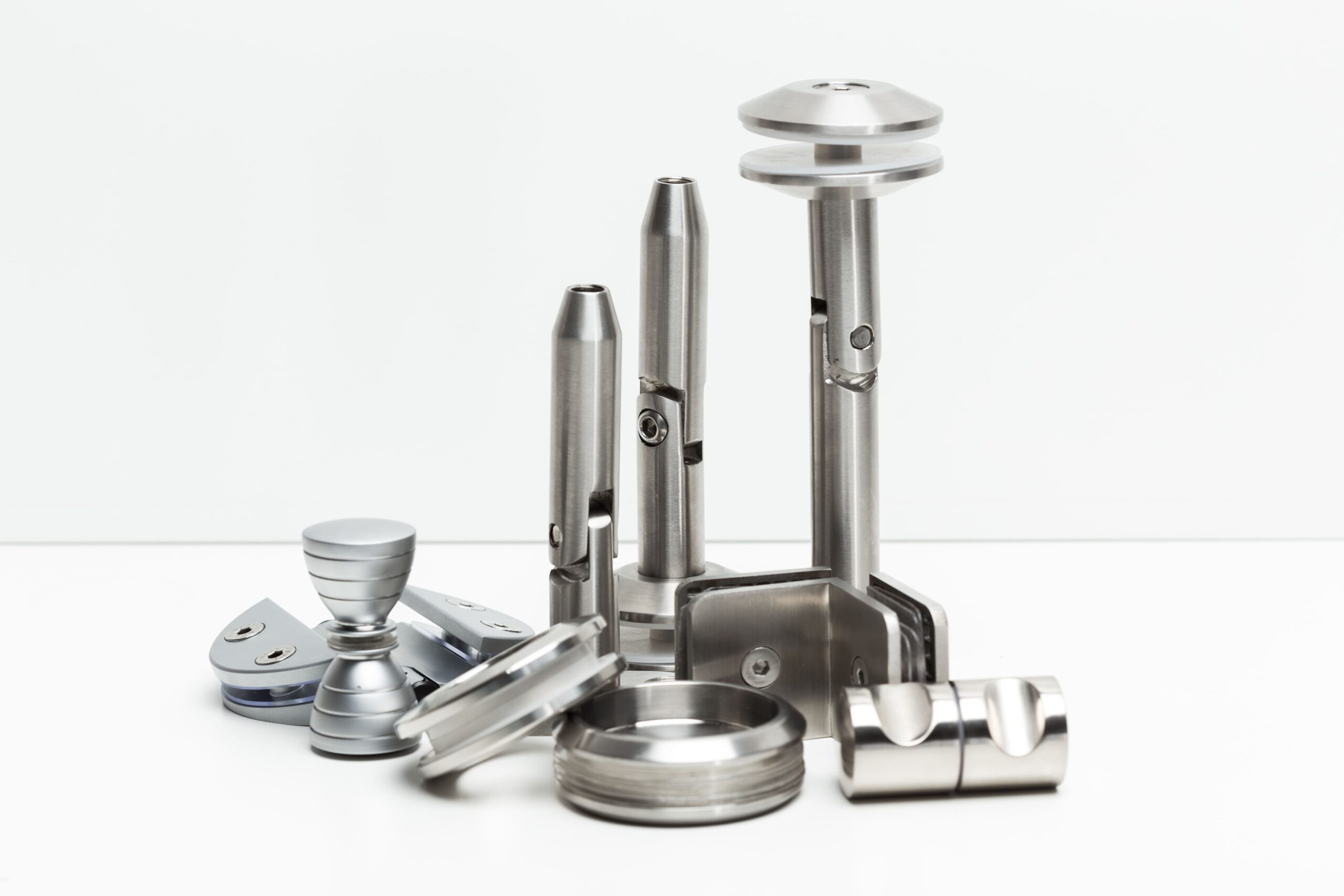
Select the optimal stainless steel grade engineered for corrosion resistance, high tensile strength, or extreme temperature environments.
| Alloy Grade | Primary Process | Key Characteristics & Advantages | Typical Applications |
|---|---|---|---|
|
Stainless Steel 304 / 304L
Industry Standard Austenitic
|
CNC Machining Sheet Metal | Most widely used stainless steel. Excellent atmospheric corrosion resistance, superior formability, and great weldability with low material cost. | Food processing equipment, kitchenware, electronic enclosures, general brackets. |
|
Stainless Steel 316 / 316L
Marine & Medical Grade
|
CNC Machining Sheet Metal | Contains molybdenum for superior pitting and chloride corrosion resistance. Highly suited for harsh chemical environments and medical sterilization. | Marine hardware, medical instruments, chemical processing pumps, pharmaceutical tanks. |
|
Stainless Steel 17-4 PH
Precipitation Hardening
|
CNC Machining | Chromium-copper precipitation hardening stainless steel delivering ultra-high yield strength, hardness, and high mechanical toughness after heat treatment. | Aerospace components, turbine blades, high-stress shafting, hydraulic valves. |
|
Stainless Steel 303
Free-Machining Grade
|
CNC Turning | Specially sulfur-alloyed non-magnetic austenitic stainless steel designed for maximum CNC machinability, fast chip breaking, and smooth surface finishes. | Screws, nuts, high-volume threaded fasteners, gears, bushings. |
|
Stainless Steel 420 / 416
Martensitic Hardenable
|
CNC Machining | Martensitic alloy capable of heat treatment to attain high hardness and wear resistance, while maintaining magnetic properties and fair machinability. | Surgical cutlery, valve stems, pump shafts, wear-resistant mechanical parts. |
|
316L Powder
Additive Manufacturing
|
3D Printing (SLM) | Stainless steel metal powder optimized for SLM 3D printing. Enables complex topological weight-reduced structures with high corrosion resistance. | Custom medical implants, organic fluid manifolds, complex cooling dies. |
| Property | SS 304 (General Purpose) |
SS 316 (Marine Grade) |
17-4 PH (High Strength) |
SS 303 (Free Machining) |
|---|---|---|---|---|
| Tensile Strength | 515–620 MPa | 515–620 MPa | 1100–1300 MPa | 500–620 MPa |
| Yield Strength | 205–290 MPa | 220–290 MPa | 1000–1170 MPa | 230–290 MPa |
| Hardness (Brinell) | 123–180 HB | 146–190 HB | 330–400 HB | 160–200 HB |
| Elongation at Break | 40–60% | 40–50% | 10–15% | 35–50% |
| Density | 8.00 g/cm³ | 8.00 g/cm³ | 7.75 g/cm³ | 8.00 g/cm³ |
| Machinability Rating | Fair (45%) | Fair (45%) | Good (45–50%) | Excellent (75%) |
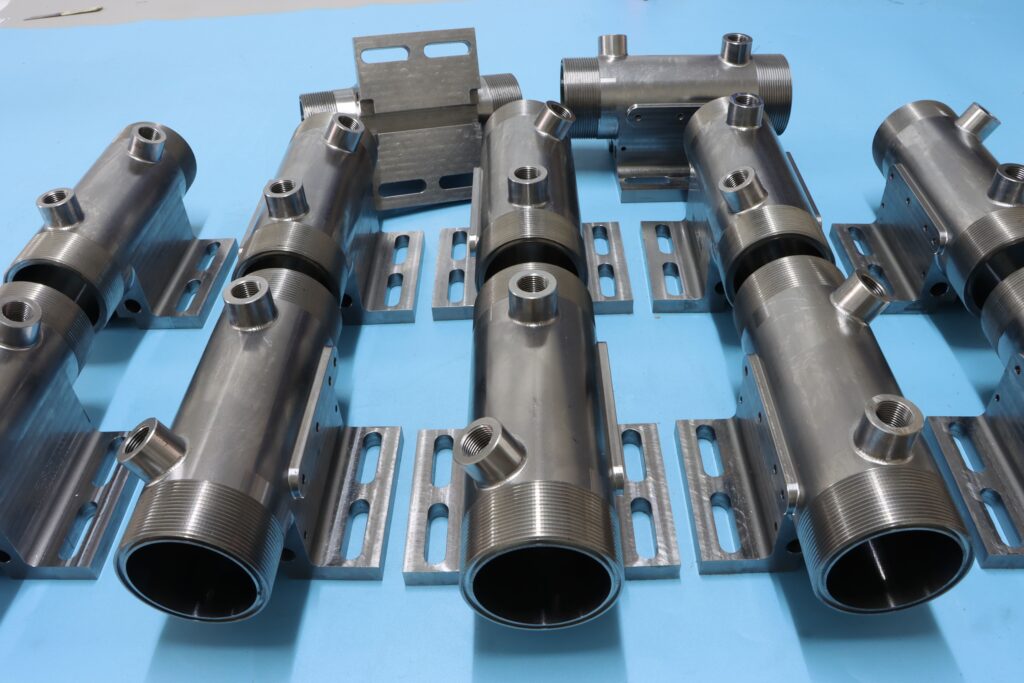
Choose from a broad spectrum of surface treatments designed to enhance passivation, corrosion resistance, surface roughness, and aesthetic lusters.
Stainless steel is highly valued across critical industries for its strength and corrosion resistance. Review its key mechanical pros and manufacturing limitations below.
SS 304 is the cost-effective general-purpose standard suitable for everyday enclosures and structural parts. SS 316 contains 2–3% Molybdenum, providing significantly higher corrosion resistance against salt spray, marine environments, harsh chemicals, and medical sterilization.
CNC machining can leave microscopic iron particles from cutting tools embedded in the stainless steel surface, leading to localized rusting. Passivation (per ASTM A967) chemically removes free iron and enriches the passive chromium layer to maximize long-term corrosion resistance.
Austenitic stainless steel work-hardens under high temperatures. We utilize rigid 5-axis CNC equipment, custom carbide tools with TiAlN coatings, low cutting speeds, heavy feeds, and high-pressure coolant to prevent work hardening and achieve precise tolerances.
Stainless Steel 17-4 PH is ideal. It can be precipitation heat-treated to achieve tensile strengths up to 1300 MPa and hardness up to 40 HRC while retaining good corrosion resistance.
Standard tolerances are ±0.05 mm (±0.002") per ISO 2768-m. For precision critical shafts, bearing fits, and internal threads, we routinely achieve tight tolerances down to ±0.01 mm (±0.0004").
Once we receive your design files, our senior manufacturing engineers will manually perform a comprehensive DFM review and deliver an accurate, optimized quote within 24 hours.