High-precision PEEK component manufacturing via 5-Axis CNC Machining and High-Temp 3D Printing (SLM/FFF). Engineered for continuous thermal endurance up to 260°C, extreme chemical immunity, and biological compliance with tight tolerances down to ±0.01 mm.
✅ All Design Uploads Are Secure & Confidential
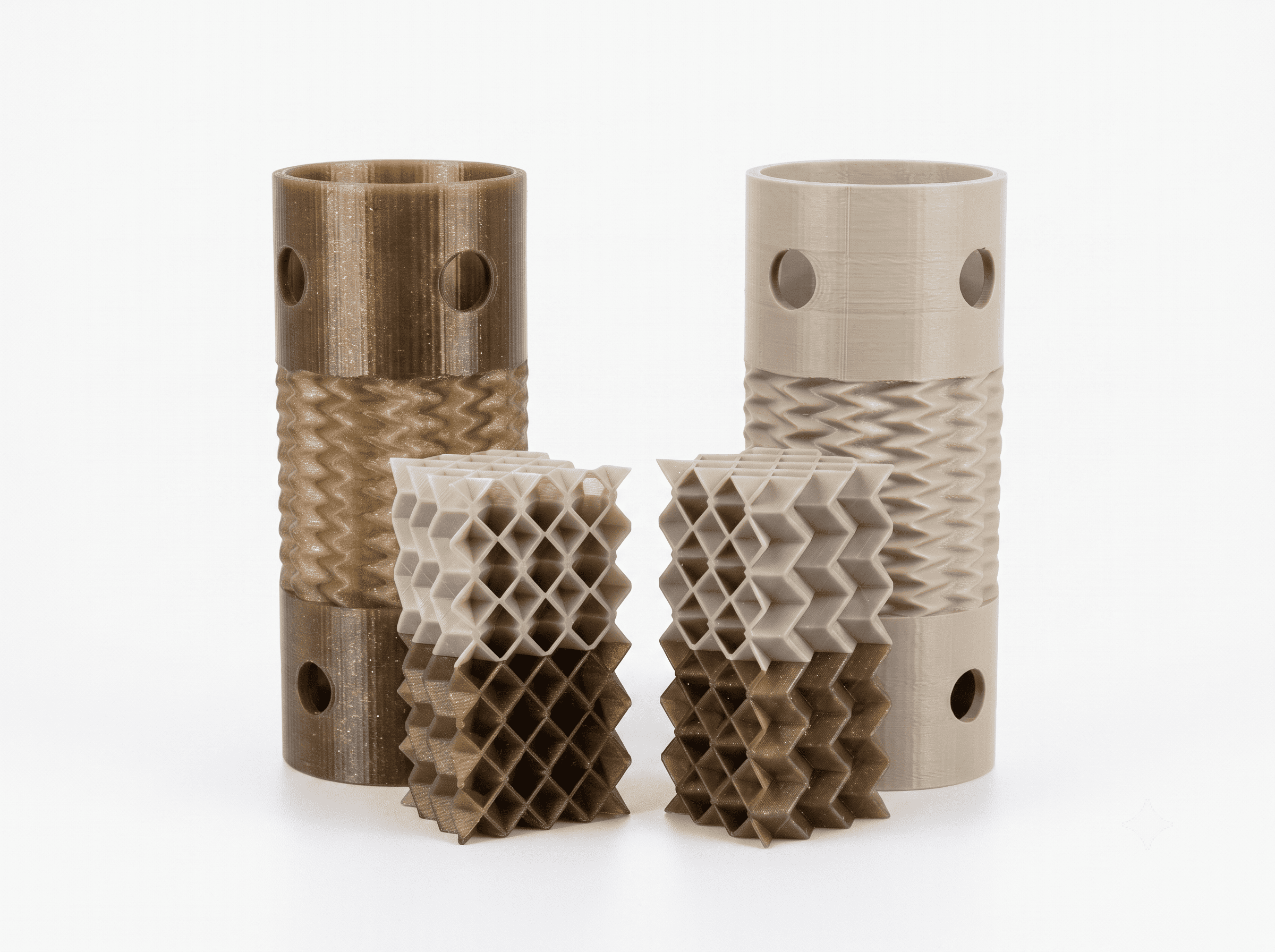
Compare high-temperature performance, tensile strength, and reinforcement options across medical and industrial PEEK grades.
| Technical Property | PEEK 450G (Unfilled) | PEEK GF30 (30% Glass) | PEEK CF30 (30% Carbon) |
|---|---|---|---|
| Density | 1.30 g/cm³ | 1.50 g/cm³ | 1.40 g/cm³ |
| Tensile Strength (Yield) | 95 – 100 MPa | 155 – 165 MPa | 210 – 225 MPa |
| Flexural Modulus | 4.1 GPa | 9.8 GPa | 18.0 GPa |
| Continuous Operating Temp | 260 °C (500 °F) | 260 °C (500 °F) | 260 °C (500 °F) |
| Heat Deflection Temp (HDT) | 160 °C | 285 °C (High Heat) | 315 °C (Extreme Heat) |
| Friction & Wear | Low Friction | High Rigidity | Ultra-Low Wear / Self-Lubricating |
| Primary Application | Semiconductor seals, medical tools | High-temp electrical insulators | Aerospace wear rings, oil & gas vanes |
Ensure zero outgassing, high dimensional stability, and semiconductor-grade cleanliness.
PEEK is the pinnacle of engineering thermoplastics, offering metal-replacement performance under harsh conditions.
PEEK offers tensile strength comparable to aluminum while being up to 60% lighter. It does not rust, resists continuous heat up to 260°C, and is radiolucent (X-ray transparent), making it superior to metals for spinal implants, surgical tools, and lightweight aircraft brackets.
Extruded PEEK stock retains internal thermal stresses. During heavy milling, raw heat can cause the material to warp. We perform controlled pre-machining and post-machining annealing in temperature-calibrated ovens to eliminate residual stress, guaranteeing tight metal-like tolerances (down to ±0.01 mm).
PEEK 450G (Unfilled): Offers the highest purity, ductility, and food/medical compliance.
PEEK GF30 (30% Glass): Significantly increases stiffness, electrical insulation, and heat deflection temperature (up to 285°C).
PEEK CF30 (30% Carbon): Provides maximum tensile strength (210+ MPa), ultra-low wear, self-lubricating wear resistance, and thermal conductivity.
Yes! PEEK exhibits extremely low outgassing rates under ultra-high vacuum (UHV) and high-temperature plasma environments. It is extensively used for semiconductor wafer rings, chemical mechanical polishing (CMP) retaining rings, and IC socket fixtures.
Please upload your 3D CAD models in STEP (.stp / .step) or IGES (.igs) format. If your component requires specific medical certifications (USP Class VI, ISO 10993), semiconductor DI washing, or annealing callouts, please attach a 2D PDF drawing.
Once we receive your design files, our senior manufacturing engineers will manually perform a comprehensive DFM review and deliver an accurate, optimized quote within 24 hours.