Skip to content
In-house CNC milling and turning for shafts, bushings, housings, mounting plates, brackets, and fixtures—including guide rails and other components up to 3 meters long.
TENGHUI supports prototypes, custom machine builds, and repeat orders, with drawing review, coordinated finishing, and inspection.
We manufacture custom metal and plastic components for equipment builders and industrial automation projects. Before production, we review material condition, mating features, processing sequence, and inspection requirements.
Production and inspection are managed against approved drawings and order requirements.
Milled and turned parts for individual prototypes, small batches, and repeat production.
Machining for guide rails and other long components. Cross-section, features, workholding, and full-length requirements are assessed for each drawing.
We review bearing fits, locating holes, mounting faces, threads, and other features that affect assembly.
Heat treatment and surface finishing are reviewed with machining allowances, masking, and final dimensions in mind.
Straightforward CNC prototypes can often be completed in 3–7 working days. Long parts, complex features, finishing, and inspection follow a separately confirmed schedule.
TENGHUI manufactures components for custom machinery, production equipment, handling systems, and tooling.
We support assembly trials, development builds, and repeat orders. Material specifications, drawing revisions, and acceptance requirements are confirmed before production.

Typical projects include shafts, mounting blocks, guide components, housings, brackets, and fixture plates.
Key requirements we review include:
In-house CNC machining, supported by sheet metal fabrication, prototyping, and coordinated heat treatment and finishing.

Machined metal and plastic components with specified mounting, locating, and mating features. Guide rails and other parts up to 3 meters long are reviewed for geometry, workholding, machining access, and inspection.
Explore CNC Machining
Cut, bent, and assembled brackets, panels, covers, and enclosures. Weld details, hardware, cosmetic surfaces, and final dimensions are confirmed before production.
Explore Sheet Metal
Machined and 3D-printed parts for fit checks, assembly trials, and design evaluation. Material and process are selected according to the intended test.
Explore Rapid Prototyping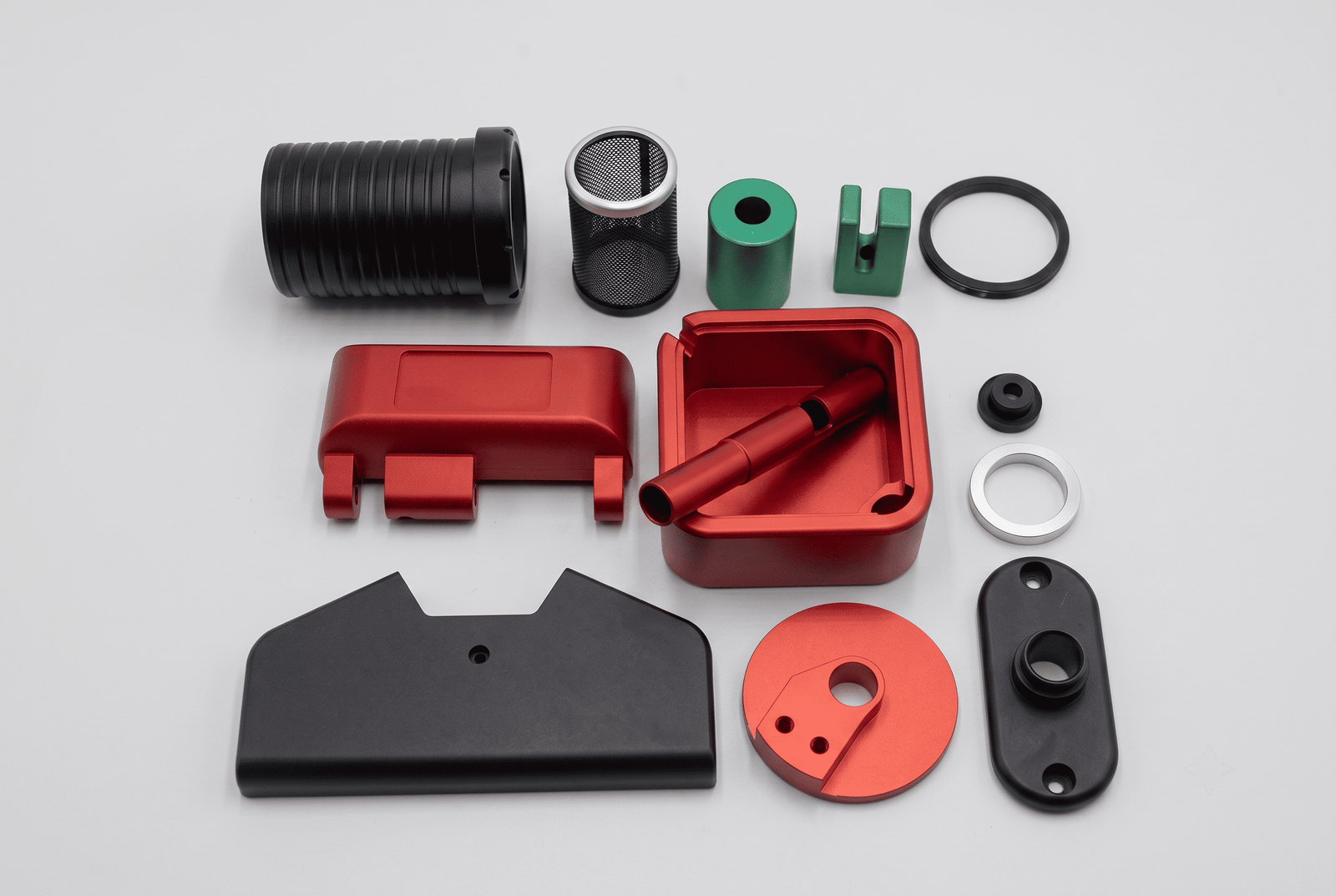
Suitable treatments are coordinated according to material and drawing requirements. The process plan accounts for hardness, distortion, coating thickness, and any finishing needed afterward.
Explore FinishingMaterial selection depends on loading, wear, corrosion exposure, welding, temperature, and dimensional requirements.
| Material | Selection Notes | Typical Components |
|---|---|---|
| Low-Carbon Steel | A practical option for many machined and fabricated parts. Grade, stock condition, and corrosion protection require confirmation. | Mounting plates, brackets, bases, and weldments. |
| Medium-Carbon & Alloy Steel | Selected according to strength, wear, hardness, and heat treatment requirements. | Shafts, pins, coupling components, and loaded machine parts. |
| Aluminum 6061 | A common choice for lightweight components and anodized finishes. | Housings, mounting blocks, plates, and brackets. |
| Aluminum 7075 | Considered where higher strength is required; corrosion protection and joining methods need review. | Loaded brackets, adapters, and tooling. |
| Stainless Steel 304 / 316L | Grade selected according to corrosion exposure, cleaning, and contact conditions. | Hardware, shafts, spacers, and selected fluid-handling parts. |
| POM / Acetal | Useful for selected sliding and locating functions; temperature and creep require consideration. | Bushings, guides, rollers, and spacers. |
| Nylon / PA | Offers useful toughness and wear characteristics; moisture affects dimensions and performance. | Rollers, wear pads, guides, and protective components. |
| UHMW-PE | Considered for selected sliding, guiding, and wear applications; stiffness and thermal expansion require review. | Wear strips, guides, liners, and contact pads. |
Material grade, supply condition, stock availability, and documentation are confirmed during quotation. Alternative materials require approval before substitution.
Explore our portfolio of precision-machined prototypes and high-durability components manufactured for global industrial machinery innovators.


Yes. We can machine guide rails and other components up to 3 meters long, subject to review of the material, cross-section, features, and required tolerances.
Please provide overall dimensions, stock condition, hole patterns, and full-length geometric requirements. Workholding, support, inspection, finishing, and transport are assessed for the specific part.
Selected local features on CNC-machined metal parts can achieve tolerances as tight as ±0.01 mm, subject to engineering review.
This does not represent a uniform tolerance across a 3-meter component. Local dimensions, hole positions, and full-length straightness, flatness, or parallelism must be specified separately.
Plastic parts require additional assessment of deformation, temperature, moisture, and loading.
We review fit requirements, datum references, surface roughness, and related geometric controls against the drawing.
Provide mating details where they affect manufacturing or inspection. Threads, keyways, splines, and other specialized features require their own specifications and feasibility review.
Final alignment and service performance also depend on the assembly design and installation.
Heat treatment can be coordinated where the material, specification, and processing route are suitable.
Specify the required hardness, material condition, treated areas, and case depth where applicable. The manufacturing plan may include rough machining, treatment, and subsequent finishing.
Heat treatment can change dimensions. Final tolerances and inspection requirements should account for these effects.
Options include anodizing, black oxide, zinc or nickel plating, passivation, painting, and powder coating where suitable.
Specify the process, thickness, color, exposure conditions, and acceptance requirements. Bearing seats, threads, electrical contacts, and precision mating surfaces may need masking.
For long components, treatment size limits and handling arrangements are confirmed separately from machining capability.
Replacement parts can be reviewed from drawings and confirmed specifications.
Include material, heat treatment, critical fits, surface finish, and relevant mating details. If only a worn sample is available, measurement and reconstruction requirements need separate review; the original dimensions should not be assumed from wear surfaces.
Urgent orders are assessed against material availability, manufacturing steps, and inspection needs.
The inspection plan depends on the specified features and geometric requirements.
We review measurement methods, support conditions, datum references, and report scope before production. Long-part inspection should distinguish local measurements from full-length geometric checks.
CMM inspection and other methods are confirmed according to feature size, access, and available measurement capacity.
Repeat orders follow the confirmed drawing revision, material condition, finishing, and inspection requirements.
First-part approval and additional checks can be included where needed. Changes affecting manufacturing, acceptance, cost, or delivery are reviewed before proceeding.
Straightforward CNC prototypes can often be completed in 3–7 working days. Medium and larger production orders commonly require around 15–20 working days.
Long parts, material sourcing, heat treatment, finishing, and special inspection may require additional time. Delivery is confirmed after technical review.
Please provide:
For long components, include full-length straightness or flatness requirements, relevant assembly details, and any transport restrictions.
Upload your 2D drawings (PDF/DWG/DXF) and 3D CAD files (STEP/IGES). We evaluate part geometry, materials, and tolerances within 24 hours.
Once we receive your design files, our senior manufacturing engineers will manually perform a comprehensive DFM review and deliver an accurate, optimized quote within 24 hours.