
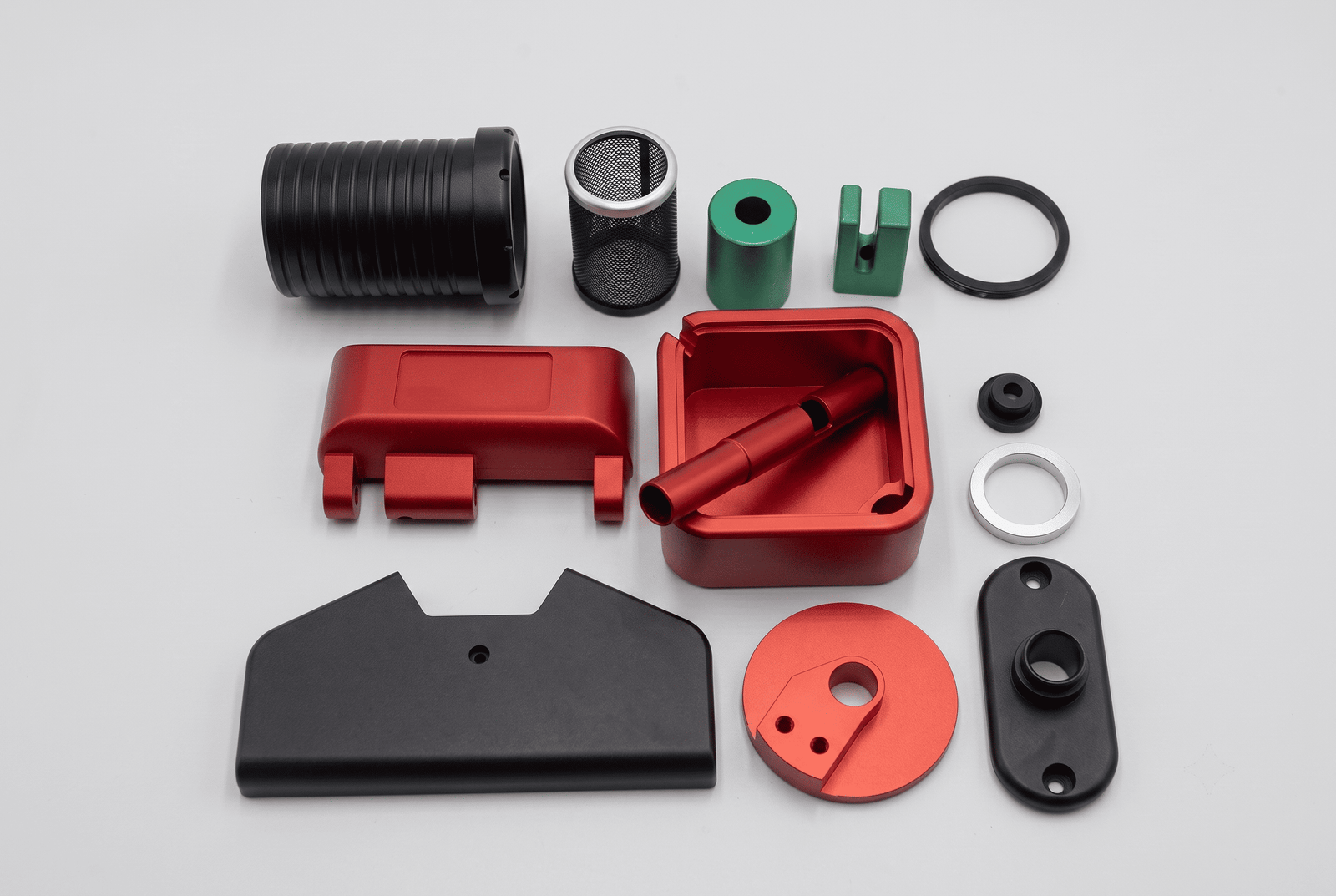
Basic Finishes
Standard or minimal surface treatments used to clean, deburr, or prepare parts for further precision processing.
As-Machined
Standard surface roughness (3.2 µm / 125 µin Ra). Parts are cleaned and deburred without additional surface finishing.
Machining MarksVisible light tool marks
ServicesCNC Machining, Sheet Metal
Suitable MaterialsMetals, Plastics
Sanding & Deburring
Uses abrasives to remove surface blemishes, smooth sharp edges, and prepare components for subsequent coatings.
Machining MarksReduced but visible
ServicesCNC Machining
Suitable MaterialsMetals, Plastics, Wood
Mechanical Polishing
Uses fine abrasive compounds to reduce surface roughness, producing a smooth, highly reflective or mirror-like appearance.
Machining MarksBright or mirror effect
ServicesCNC Machining
Suitable MaterialsMetals, Plastics
Surface Textures
Abrasive blasting processes that remove surface contaminants and create uniform matte or satin textured finishes.
Sand Blasting
Uses compressed air to propel abrasive media, effectively removing scale, rust, and surface contaminants with light texture.
Machining MarksUniform rough feel
ServicesCNC Machining, Sheet Metal
Suitable MaterialsMetals, Plastics, Glass, Ceramics
Bead Blasting
Shoots fine glass beads at high pressure to clean parts and yield a smooth, glare-free matte satin texture without changing tolerances.
Machining MarksMatte or satin texture
ServicesCNC Machining, Sheet Metal
Suitable MaterialsMetals, Plastics, Ceramics
Coatings & Painting
Applies protective or decorative layers over components to enhance durability, corrosion resistance, and aesthetic appeal.
Powder Coating
Electrostatically applies dry powder and heat-cures it to form a durable, uniform, colorful, and UV-resistant protective layer.
Machining MarksCompletely removed
ServicesCNC, Sheet Metal, Injection Molding
Suitable MaterialsMetals, Heat-resistant Plastics
Spray Painting
Applies liquid paint coats over part surfaces for aesthetic color customization, branding logos, or functional surface protection.
Machining MarksPartially visible
ServicesCNC, Sheet Metal, Molding, 3D Print
Suitable MaterialsMetals, Plastics, Wood, Composites
Cataphoretic Coating (E-Coating)
Uses electrical current in a paint bath to deposit a uniform, highly corrosion-resistant organic coating over conductive metal parts.
Machining MarksHidden
ServicesCNC Machining, Sheet Metal
Suitable MaterialsSteel, Aluminum, Zinc, Cast Iron
Electroplating & Metallic Coatings
Deposits thin metallic layers via electrolysis to prevent rusting, improve conductivity, and elevate visual appearance.
Electroplating
Electrochemical process depositing thin protective metal films (like chrome, gold, or silver) onto conductive part surfaces.
Machining MarksPartially hidden
ServicesCNC Machining, Sheet Metal
Suitable MaterialsMetals, ABS Plastic
Zinc Plating (Galvanizing)
Applies a sacrificial zinc coating to protect iron and steel components from atmospheric corrosion and sacrificial rusting.
Machining MarksPartially hidden
ServicesCNC Machining, Electroplating
Suitable MaterialsSteel, Iron, Brass
Nickel Plating
Deposits a thin, hard nickel layer to provide superior wear resistance, chemical protection, and a bright metallic luster.
Machining MarksPartially hidden
ServicesCNC Machining, Sheet Metal
Suitable MaterialsSteel, Copper, Brass, Aluminum
Chemical Treatments
Alters metal surface chemistry through immersion to maximize corrosion resistance, surface hardness, and paint adhesion.
Anodizing (Type I, II, III)
Thickens the natural oxide layer on aluminum and titanium to boost corrosion/wear resistance and allow custom color dyeing.
Machining MarksVisible
ServicesCNC Machining, Sheet Metal
Suitable MaterialsAluminum, Titanium
Passivation (ASTM A967)
Chemical acid bath treatment removing free iron contaminants from stainless steel surfaces, creating a corrosion-resistant passive film.
Machining MarksVisible
ServicesCNC Machining, Sheet Metal
Suitable MaterialsStainless Steel, Corrosion Alloys
Chromate Conversion (Chem Film)
Chemical conversion coating for aluminum/magnesium providing corrosion resistance while preserving low electrical contact resistance.
Machining MarksVisible
ServicesCNC Machining, Sheet Metal
Suitable MaterialsAluminum, Magnesium Alloys
Black Oxide Coating
Chemical conversion coating producing a dark magnetite surface on ferrous metals to reduce reflection and provide mild corrosion resistance.
Machining MarksVisible
ServicesCNC Machining, Sheet Metal
Suitable MaterialsCopper, Steel, Iron