TENGHUI provides custom sheet metal bending services for brackets, channels, panels, trays, chassis, enclosure bodies, cylinders, and other bent metal parts.
CNC press brake bending, hemming, offset bending, large-radius bending, and roll bending are available for one-off prototypes, low-volume projects, and production orders. For standard-sized parts, critical bent dimensions can typically be controlled within ±0.15 mm to ±0.2 mm, depending on the material, sheet thickness, bend length, and part geometry.
Send your 2D drawings and 3D CAD files for a bending feasibility review and quotation
✅ All Design Uploads Are Secure & Confidential
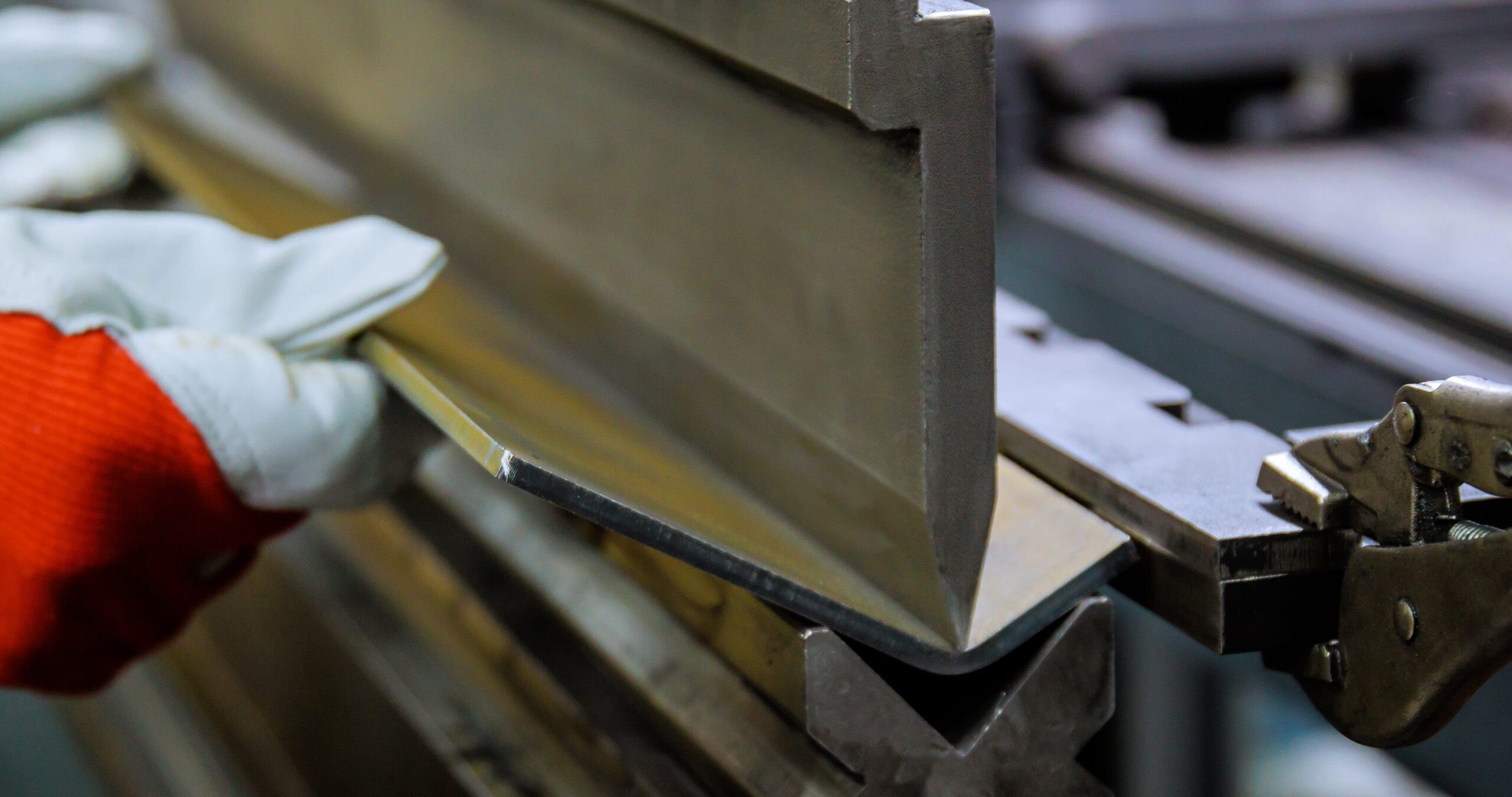
We utilize a diverse range of bending techniques to form complex 3D shapes from flat sheet metal. By matching the right bending method to your design, we ensure maximum structural strength, precise angles, and zero cosmetic damage.
CNC press brakes with programmable backgauges control bend positions, flange dimensions, and angles for custom brackets, panels, channels, covers, and enclosures.
Multiple bends are combined to produce trays, chassis, boxes, frames, and bodies. Sequences are planned to maintain tool access and control tolerance accumulation.
Offset and joggle bends place two sections of a sheet on parallel planes, commonly used to create clearance for overlapping panels, mounting features, and mating parts.
Open, closed, and teardrop hems improve edge safety, stiffness, appearance, and assembly performance based on sheet material, thickness, and bend direction.
Large radii are produced with specialized tooling or a sequence of closely spaced bends, ideal for curved guards, covers, and transition components.
Roll bending produces continuous curves, cylinders, sleeves, cones, and radius panels. Achievable roundness depends on material geometry and seam design.
We utilize CNC Press Brakes and high-performance hydraulic bending machines to process aluminum, stainless steel, carbon steel, and copper. CNC automation ensures that back-gauge positioning and depth control are held to extreme tolerances across every batch.
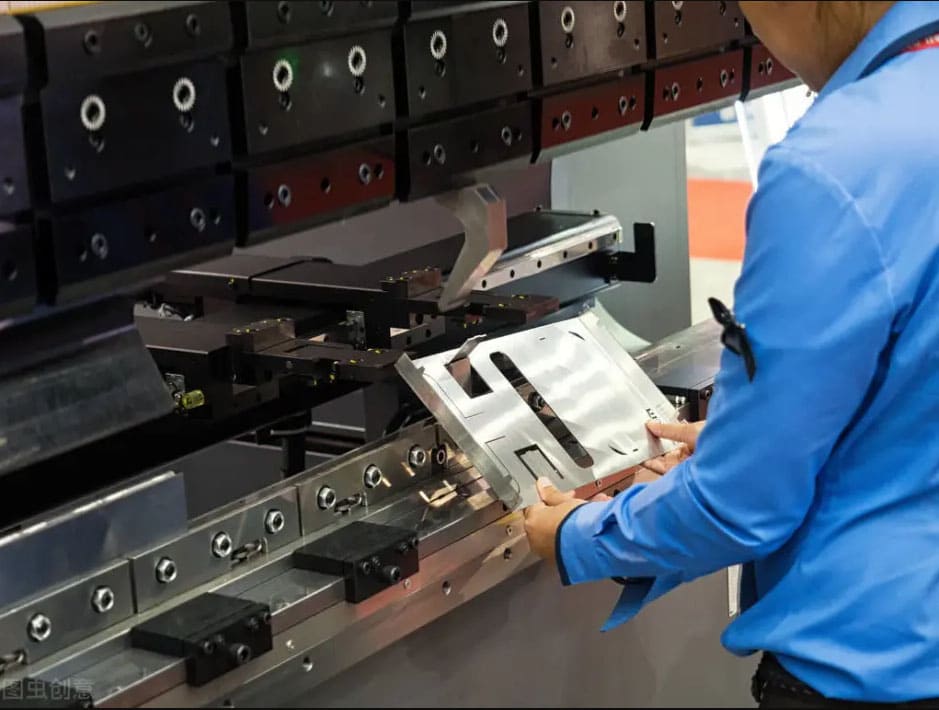
For standard-sized components, TENGHUI typically maintains ±0.15 mm to ±0.2 mm on critical bent dimensions. This is a typical capability rather than a blanket tolerance; long bend lines, thick sheets, tight radii, and multi-bend parts may require wider tolerances.
| Requirement | Typical Capability | Important Considerations |
|---|---|---|
| Critical bent dimensions | ±0.15 mm to ±0.2 mm | Material, thickness, bend position and geometry |
| Bend angles | Drawing review required | Springback, bend length, tooling and material condition |
| Multi-bend components | Drawing review required | Tolerance accumulation, bend sequence and datum selection |
| Long or large components | Drawing review required | Bend length, material flatness and part weight |
| Large-radius bends | Drawing review required | Radius-to-thickness ratio, tooling and springback |
| Rolled diameter and roundness | Drawing review required | Material, thickness, width, seam and geometry |
Material grade, temper, hardness, and actual sheet thickness directly affect the required bending force, inside radius, springback, flange position, and finished dimensions.
After the bending force is removed, the material partially returns toward its original shape. The amount of springback varies with material strength, thickness, radius, and grain.
The inside radius is influenced by the material, thickness, punch radius, and V-die opening. Impractical radius specs can lead to cracking, marking, or unstable dimensions.
Bending parallel to the material grain increases cracking risks, especially in aluminum and high-strength alloys. Grain orientation should be specified for critical parts.
The order of multiple bends affects tool access, datum control, flange clearance, and accumulated tolerance. Deep returns and narrow channels require careful planning.
Punch/die selection, backgauge setup, tooling alignment, return-flange clearance, and tool-contact areas all affect bend consistency and surface appearance.
Material condition is critical for successful forming. For example, 6061-T6 and 7075 aluminum are less suitable for tight or complex bends than softer grades. Always specify the exact alloy grade and temper on your technical drawings.
| Material | Available Grades | Bending Considerations |
|---|---|---|
| Aluminum | 1050, 1060, 5052, 5754, 5083, 6061, 6063, 7075 | Softer grades bend easily. Heat-treated & high-strength grades require larger radii and drawing review. |
| Stainless Steel | SUS301, SUS304, SUS316 | Requires greater bending force and springback compensation than mild steel. |
| Cold-Rolled Steel | SPCC, DC01, DC05 | Offers good bendability and smooth surface quality for panels, trays, covers, and brackets. |
| Hot-Rolled Steel | SPHC, Q235, Q355 | Suitable for structural brackets, frames, supports, and heavier bent components. |
| Galvanized Steel | SECC, SGCC | Tooling and handling should account for zinc-coating protection and cosmetic requirements. |
| Copper & Brass | T2, H62, H65 | Suitable for conductive parts, electrical terminals, covers, and decorative hardware. |
| Titanium | TC4 | Available for selected high-performance projects; bending feasibility requires individual review. |
Using the same inside bend radius throughout a component reduces tooling changes, machine setup time, and dimensional variation.
Minimum practical radius depends on material grade, temper, thickness, grain, and method. Tight radii can cause cracking, thinning, or tool marks.
Holes, slots, and cutouts too close to a bend may stretch, distort, or shift. Identify functional requirements for engineering review if location is critical.
Bend reliefs help reduce tearing, bulging, and material interference where a bend line terminates at an edge or an adjacent flange.
A flange must be long enough to sit securely on the die during bending. Minimum length depends on thickness, angle, radius, and V-die opening.
Deep returns, narrow U-channels, and closely spaced bends may interfere with press brake tooling. Providing 3D models allows pre-production review.
Light tool-contact marks may occur. Clearly identify visible exterior surfaces, protective-film requirements, grain direction, and acceptable marks on drawings.
Specify functional dimensions in the final bent condition using clear datums. Avoid defining every critical feature solely from the unfolded flat pattern.
Standard and custom shaped brackets designed for structural support and component positioning.
Rigid channel sections offering high load-bearing capacity for frames, rails, and assemblies.
Clean-finished equipment faceplates, side panels, and protective safety guards for industrial devices.
Multi-bend electrical chassis, instrument boxes, and custom housing bodies built for internal protection.
Precision-bent sliding trays, holders, and internal support frames designed for modular racking.
Panels featuring parallel joggle or offset bends to create proper clearance for overlapping joints.
Roll-formed sleeves, cylindrical pipes, and radius guards produced via continuous forming processes.
Specialized tapered cones and fluid or airflow transition ducts fabricated for ventilation and systems.
Your 2D drawing and 3D model are reviewed for material, thickness, bend radii, flange dimensions, tolerances, quantity, and cosmetic requirements.
The flat blank is developed using bend allowance, deduction, and material compensation. Features near bend lines and interference are identified prior to production.
Punches, dies, backgauge positions, and bending sequences are systematically selected according to the material specifications and finished part geometry.
The initial part is thoroughly checked for bend angle, flange dimensions, radius, hole positions, and overall geometry before running the remaining volume.
Production parts are manufactured using approved programs and tooling setups. Critical dimensions and surface appearance are inspected before final delivery.
Sheet metal bending uses controlled force to permanently bend a flat metal sheet along one or more lines. CNC press brake bending is commonly used to manufacture brackets, channels, panels, trays, chassis, and enclosures.
Available services include CNC press brake bending, multi-bend parts, offset and joggle bending, hemming, edge folding, large-radius bending, bump bending, and sheet metal roll bending.
For standard-sized parts, critical bent dimensions can typically be controlled within ±0.15 mm to ±0.2 mm. Actual tolerances depend on material, thickness, bend length, geometry, and the number of bends.
There is no universal minimum bend radius. It depends on material grade, temper, thickness, grain direction, tooling, and bending method. Tight-radius requirements should be identified for review.
Springback occurs because the material elastically recovers after the bending force is removed. The amount varies by material strength, thickness, radius, grain direction, and tooling.
Yes, but features located too close to a bend may stretch, distort, or shift. Increasing the distance from the bend line or adding relief features may improve the result.
Yes. Multi-bend brackets, channels, trays, chassis, covers, frames, and enclosure bodies are supported. Tooling access and tolerance accumulation are reviewed before production.
Light contact marks may occur during press brake bending. Identify cosmetic surfaces and protective-film requirements before quotation so that suitable handling and tooling options can be evaluated.
Yes. Roll bending is available for cylinders, sleeves, cones, curved guards, and radius panels. Achievable diameter and roundness depend on the material, thickness, width, seam, and geometry.
Provide a STEP or STP model together with a dimensioned PDF, DXF, or DWG drawing. Include the material grade, thickness, bend radii, critical dimensions, tolerances, quantity, and cosmetic requirements.
Once we receive your design files, our senior manufacturing engineers will manually perform a comprehensive DFM review and deliver an accurate, optimized quote within 24 hours.