Skip to content
In-house CNC milling and turning for communication equipment housings, covers, mounting brackets, connector shells, and thermal contact parts.
TENGHUI supports prototypes and low-to-medium volume orders, with drawing review, coordinated finishing, and inspection against agreed requirements.
We manufacture custom metal and plastic components for communication equipment assemblies. Before production, we review mounting features, contact surfaces, material specifications, and finishing requirements.
Production and inspection are managed against approved drawings and order requirements.
Milled and turned components for individual prototypes, small batches, and repeat orders.
Material grade, supply condition, availability, and required documentation are confirmed during quotation.
Straightforward CNC prototypes can often be completed in 3–7 working days. Quantity, complexity, finishing, and inspection determine the confirmed schedule.
Finishes are reviewed for corrosion exposure, appearance, electrical contacts, and finished dimensions.
We assess tool access, wall thickness, threads, mating features, and coating allowances. Manufacturing concerns are raised before production.
TENGHUI manufactures mechanical components for communication equipment, electronics enclosures, and supporting assemblies.
We support layout reviews, fit checks, assembly trials, and repeat production. Prototype materials and processes are selected according to the intended test.

Typical projects include machined housings, cover plates, brackets, adapters, and connector shells.
Key requirements we review include:
In-house CNC machining, supported by sheet metal fabrication, rapid prototyping, and coordinated finishing.

Milled and turned housings, mounting parts, connector shells, and thermal components. Cavity features are reviewed for tool access, dimensions, and inspection.
Explore CNC Machining
Cut, bent, and assembled panels, brackets, covers, and enclosures. Cutouts, joints, hardware, and final dimensions are confirmed before production.
Explore Sheet Metal
Machined and 3D-printed parts for layout, fit, and assembly evaluation. Functional tests require materials and processes suited to the test conditions.
Explore Rapid Prototyping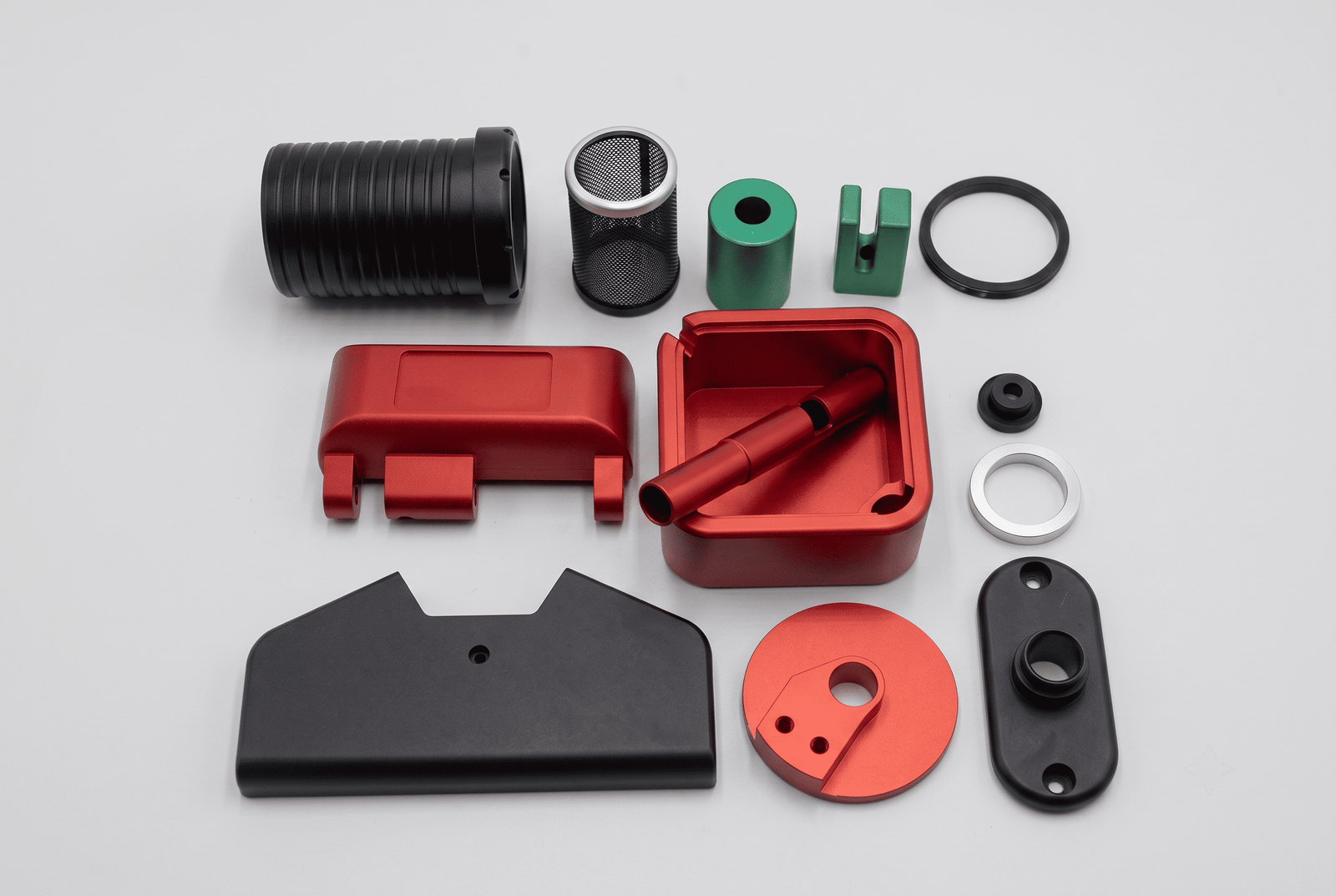
Anodizing, nickel plating, passivation, painting, and powder coating can be evaluated where suitable. Thickness, masking, electrical contacts, and finished dimensions are reviewed together.
Explore FinishingMaterial selection depends on loading, contact conditions, thermal requirements, corrosion exposure, and the operating environment.
| Material | Selection Notes | Typical Components |
|---|---|---|
| Aluminum 6061 | A common choice for lightweight housings and mounting parts; finish and electrical contact areas require review. | Housings, covers, brackets, mounting plates, and heat sinks. |
| Copper C11000 | High electrical and thermal conductivity; contact condition and protective finishing affect connection performance. | Conductive blocks, grounding parts, and heat-transfer components. |
| Brass C36000 | Good machinability for detailed turned and threaded features; lead-content requirements must be checked. | Connector shells, coupling nuts, adapters, and spacers. |
| Stainless Steel 304 / 316L | Grade selected according to corrosion exposure, loading, and surface requirements. | Mounting hardware, brackets, shafts, and support components. |
| POM / Acetal | Useful for selected locating, sliding, and insulating functions; temperature and creep require consideration. | Spacers, guides, bushings, and mounting supports. |
| ABS / PC | Selected according to toughness, appearance, temperature, and environmental requirements. | Prototype housings, covers, and assembly models. |
Material grade, stock availability, and documentation are confirmed during quotation. Outdoor, electrical, and flame-performance requirements must be specified for the selected grade.
Selected machined and fabricated components demonstrating our capabilities in housings, mounting interfaces, connectors, and equipment assembly.


Yes. Aluminum and copper components can be reviewed for fins, mounting holes, contact faces, and other machined features.
Specify contact area, flatness, roughness, interface dimensions, and finish restrictions. Thin fins and deep features require assessment of tool access and deformation risks.
Cooling performance depends on the complete design, interface materials, airflow, and operating conditions. Thermal testing requires a separately agreed scope.
We machine metal housings, covers, partitions, and contact features according to the drawing.
Identify grounding points, gasket grooves, mating surfaces, and coating restrictions. Anodized or painted areas may require masking where electrical contact is needed.
Shielding performance depends on the complete enclosure, openings, joints, connectors, and assembly. Any measured shielding requirements must be reviewed separately.
The finish depends on the material, exposure, appearance, and maintenance requirements.
Anodizing, suitable powder coating or painting, plating, and passivation can be reviewed where applicable. Specify the required process, thickness, masking, and corrosion acceptance criteria.
If salt-spray testing is required, include the test method, duration, specimen requirements, and pass/fail criteria. Availability is confirmed during quotation.
These parts can be reviewed for machining feasibility against the supplied drawings.
Cavity dimensions, corner radii, wall thickness, surface roughness, contact faces, and plating requirements must be defined. Tool access and inspection access are assessed before quotation.
Our scope is mechanical manufacturing. RF tuning, insertion loss, return loss, and other electrical performance tests require separate confirmation.
Selected CNC-machined metal features can achieve tolerances as tight as ±0.01 mm, subject to engineering review.
Achievable limits depend on feature size, geometry, material, and finishing. Threads, fits, and geometric tolerances should be specified individually.
Dimensions affected by coating should clearly apply to the finished part. Inspection methods, coverage, and reports are agreed before production.
Yes, subject to drawing and process review.
Specify groove dimensions, mating surfaces, fastener locations, edge conditions, and the intended sealing arrangement. Coating thickness must be considered at sealing interfaces.
Machining to drawing does not by itself establish an IP rating or leak rate. Assembly testing and acceptance requirements must be agreed separately.
We review revised drawings for changes to geometry, material, finishing, and inspection.
Repeat orders follow the confirmed drawing revision and agreed specifications. First-part approval can be included where required, with production quantity and delivery assessed for the component.
Straightforward CNC prototypes can often be completed in 3–7 working days. Medium and larger production orders commonly require around 15–20 working days.
Material sourcing, complex cavities, finishing, and special inspection may extend the schedule. Delivery is confirmed after technical review.
Please provide:
For RF-related parts, distinguish mechanical acceptance requirements from electrical testing requirements.
Upload your 2D drawings (PDF/DWG/DXF) and 3D CAD files (STEP/IGES). We evaluate part geometry, materials, and tolerances within 24 hours.
Once we receive your design files, our senior manufacturing engineers will manually perform a comprehensive DFM review and deliver an accurate, optimized quote within 24 hours.