Skip to content
In-house CNC machining for transparent PMMA manifolds, instrument housings, mounting components, and precision mechanical parts.
TENGHUI supports prototypes and low-to-medium volume orders, with drawing review, coordinated finishing, and inspection against agreed requirements.
We manufacture custom components for IVD systems, laboratory instruments, and medical analytical equipment. Our team reviews critical features, material requirements, and finishing details before production.
Production and inspection are managed against approved drawings and order requirements.
CNC milling and turning for metal and engineering plastic components, from individual prototypes to repeat orders.
Experience machining transparent blocks with channels, threaded ports, cavities, and mating features for medical and laboratory equipment.
We review tool access, wall thickness, threads, tolerances, and finishing requirements. Manufacturing concerns are raised before production.
Anodizing, painting, polishing, and other suitable finishes are reviewed for appearance, corrosion exposure, wear, and assembly.
Straightforward CNC prototypes can often be completed in 3–7 working days. Material sourcing, complexity, finishing, and inspection determine the confirmed schedule.
TENGHUI manufactures parts for diagnostic instruments, laboratory automation, and medical equipment assemblies.
We support design evaluation, fit checks, assembly trials, and repeat production. Material specifications, drawing revisions, and acceptance requirements are confirmed for each order.

Our work includes transparent fluid-handling blocks, aluminum housings, plastic covers, instrument frames, and mechanical components.
Key features we review include:
In-house CNC machining, supported by sheet metal fabrication, rapid prototyping, and coordinated finishing.

Milled and turned components in aluminum, stainless steel, and engineering plastics. Critical features are reviewed for machining and inspection.
Explore CNC Machining
Cut, bent, and assembled covers, panels, brackets, and enclosures. Welds, hardware, cosmetic surfaces, and final dimensions are confirmed before production.
Explore Sheet Metal
Machined and 3D-printed parts for appearance reviews, fit checks, and assembly evaluation. Material and process are selected according to the intended test.
Request Prototyping Quote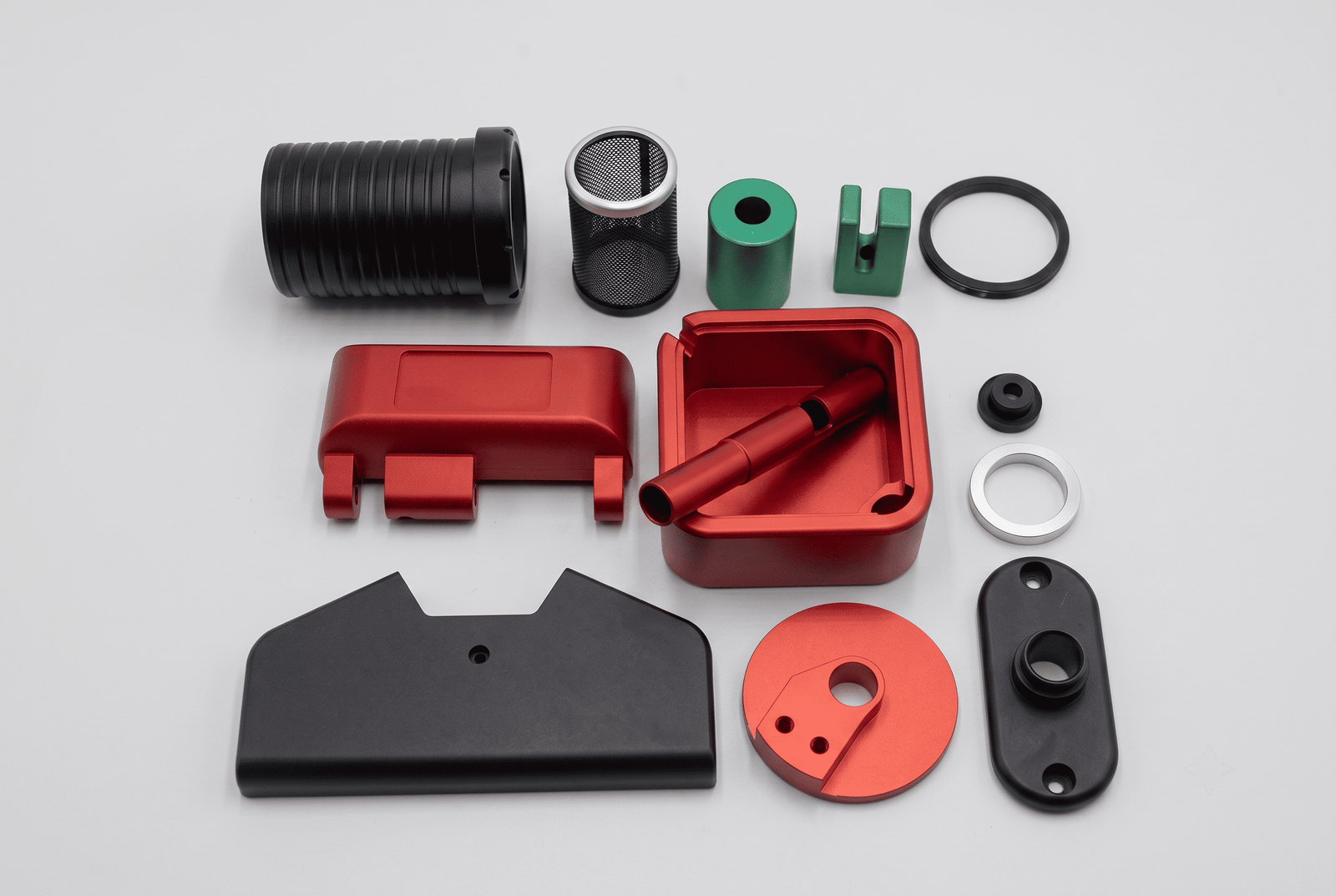
Finishes selected for appearance and functional requirements. Coating thickness, masking, contact areas, and finished dimensions are reviewed together.
Explore FinishingMaterial selection follows the drawing, operating environment, and component function. Grade, supply condition, availability, and documentation are confirmed during quotation.
| Material | Selection Notes | Typical Components |
|---|---|---|
| Aluminum 6061 | A common option for machined equipment parts and anodized finishes. | Housings, mounting plates, frames, and brackets. |
| Aluminum 7075 | Considered where higher strength is required; finishing and assembly conditions need review. | Loaded components, supports, and fixtures. |
| Stainless Steel 304 / 316L | Grade selected according to corrosion exposure, contact fluids, and cleaning conditions. | Shafts, brackets, fittings, and selected fluid-handling parts. |
| PMMA / Acrylic | Clear appearance for observing internal features or fluid movement; chemical compatibility and processing stress require review. | Transparent manifolds, fluid-handling blocks, and viewing windows. |
| Polycarbonate / PC | Transparent grades with useful toughness; cleaning agents and assembly stress require consideration. | Instrument covers, viewing components, and housings. |
| POM / Acetal | Useful for selected sliding, locating, and mechanical functions. | Bushings, guides, valve components, and fixtures. |
| ABS | A practical option for machined covers and appearance models. | Enclosures, covers, and prototype assemblies. |
Specify exact grades where required. Use in medical equipment does not automatically make a material suitable for patient contact, sterilization, or a particular fluid.
Selected examples of transparent fluid-handling parts, instrument housings, and precision mechanical components.


TENGHUI is ISO 9001:2015 certified. We are not currently ISO 13485 certified.
Our focus is custom components for IVD, laboratory, and medical analytical equipment. If your project requires additional qualifications or specific quality procedures, include them with your inquiry for review before order acceptance.
Yes. We CNC machine PMMA fluid-handling blocks and manifolds with features such as drilled channels, threaded ports, cavities, and mounting holes.
We review channel access, sealing arrangements, transparent surfaces, and dimensions against your drawings. Enclosed features, intersecting passages, and areas requiring internal finishing need individual assessment.
Material, cleaning, inspection, and any leak or pressure testing requirements must be confirmed during quotation.
Identify viewing surfaces separately from sealing, mating, and non-cosmetic areas.
Transparent finishing is reviewed according to surface access and geometry. Sealing features require defined dimensions, roughness, and edge conditions. Polishing must not compromise these requirements.
For appearance-critical parts, reference samples can help establish acceptance criteria. Measurable optical performance requires a separate specification.
Selected CNC-machined metal features can achieve tolerances as tight as ±0.01 mm, subject to engineering review.
Plastic parts require separate assessment of geometry, material condition, temperature, and finishing. Tight limits should not be applied uniformly to every feature.
Mark critical fits, threads, flatness, and roughness on your drawing. Dimensions affected by finishing should clearly apply to the finished part.
Dimensional reports, CMM inspection, and material documentation can be reviewed during quotation.
Please specify the required features, inspection coverage, report format, and traceability. Document availability depends on the material source and processing route.
Requirements for additional testing or substance-compliance information should be agreed before ordering.
Options include clear, black, and hard anodizing for suitable aluminum parts, along with painting, polishing, blasting, and marking where applicable.
Specify the finish, thickness, color, cosmetic areas, and masking. Electrical contacts, sealing surfaces, threads, and precision fits may need protection.
Finishing does not automatically establish cleanliness, sterilization compatibility, or electrical shielding performance.
Cleaning and packaging are selected according to the part and agreed requirements.
For fluid-handling components, identify accessible channels and any residue or particle limits. Controlled cleanliness, cleaning validation, or special packaging requires separate review.
Transparent and cosmetic surfaces are protected to reduce rubbing and handling marks during transport.
An NDA can be signed before you share drawings or project information.
Single-part CNC prototypes can be reviewed, along with low-to-medium volume and repeat orders. Minimum quantities for special materials or secondary processes are confirmed during quotation.
Please provide:
For repeat production, include the approved drawing revision and any first-part approval requirements.
Upload your 2D drawings (PDF/DWG/DXF) and 3D CAD files (STEP/IGES). We evaluate part geometry, materials, and tolerances within 24 hours.
Once we receive your design files, our senior manufacturing engineers will manually perform a comprehensive DFM review and deliver an accurate, optimized quote within 24 hours.