Precision Polypropylene component manufacturing via CNC Machining, Sheet Fabrication (Welding), and Injection Molding. Delivering supreme chemical resistance, exceptional fatigue endurance (living hinges), and ultra-lightweight performance with tight tolerances down to ±0.02 mm.
✅ All Design Uploads Are Secure & Confidential
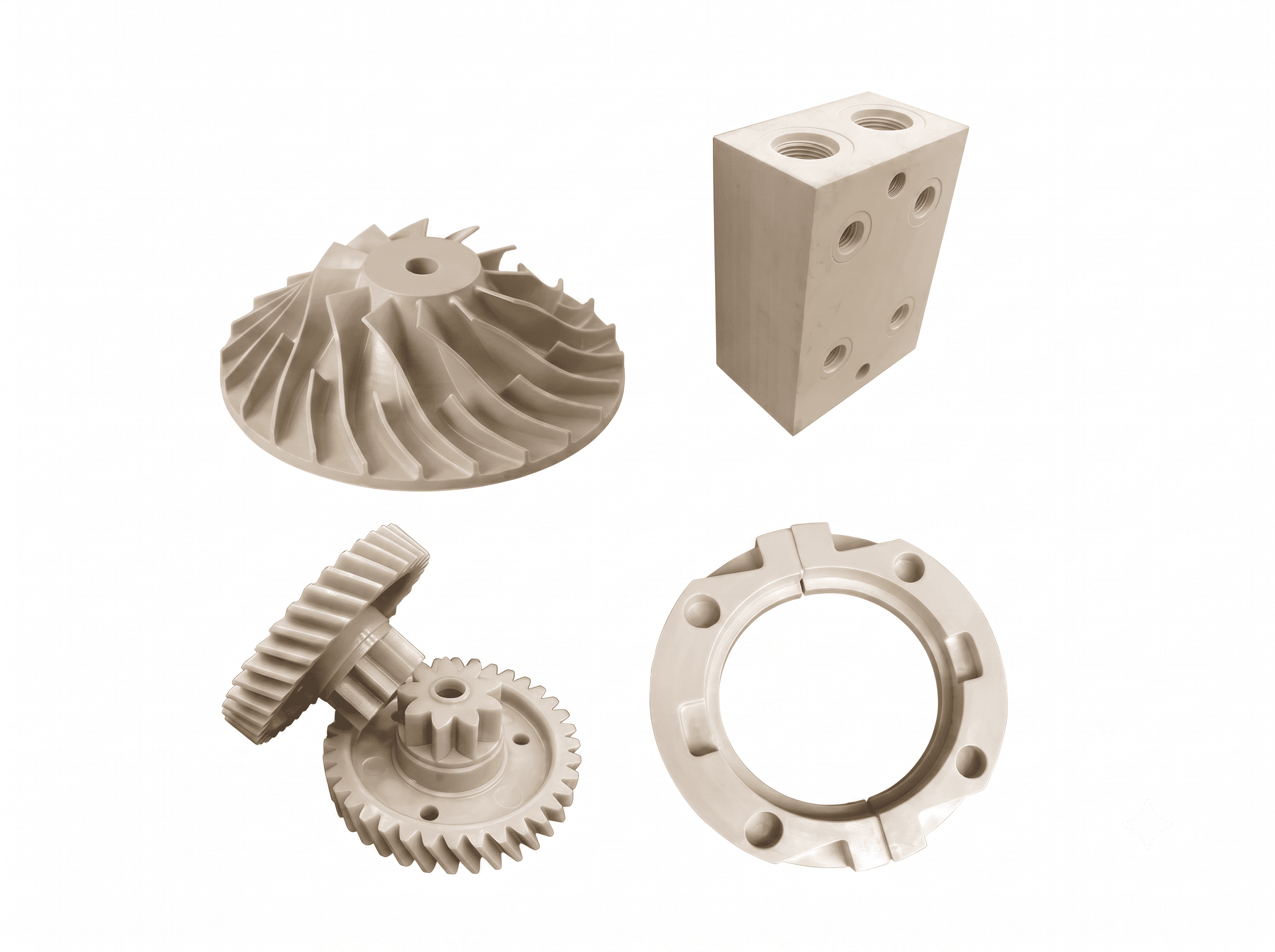
Compare chemical resistance, impact toughness, and glass-fiber reinforcement options across industrial PP grades.
| Technical Property | PP Homopolymer (PPH) | PP Copolymer (PPC) | PP + 30% Glass Filled (PP-GF30) |
|---|---|---|---|
| Density | 0.90 – 0.91 g/cm³ (Floats on Water) | 0.90 – 0.91 g/cm³ | 1.12 – 1.15 g/cm³ |
| Tensile Strength (Yield) | 32 – 38 MPa | 25 – 30 MPa | 60 – 75 MPa |
| Flexural Modulus | 1.3 – 1.6 GPa | 1.1 – 1.3 GPa | 3.5 – 4.5 GPa (High Rigidity) |
| Heat Deflection Temp (HDT) | 90 – 100 °C (194–212 °F) | 75 – 85 °C | 130 – 140 °C (High Heat) |
| Impact Strength (Izod) | Moderate | High (Excellent Low-Temp Impact) | Moderate (High Stiffness) |
| Fatigue Resistance | Outstanding (Ideal for Living Hinges) | Outstanding | Good |
| Primary Application | Chemical tanks, laboratory sinks, valves | Automotive battery cases, tough containers | Rigid structural brackets, pump impellers |
Enhance surface bonding energy, remove machining burrs, and achieve clean industrial finishes.
Polypropylene offers unmatched chemical resistance and fatigue endurance at an economical price point.
A "living hinge" is a thin, flexible plastic bridge that connects two rigid parts (like a shampoo bottle flip-top lid). Polypropylene exhibits extraordinary fatigue resistance and can flex millions of times without snapping or fatiguing, making it the industry standard for living hinges.
Polypropylene has a very low surface energy, meaning standard industrial adhesives and paints will bead up and peel off. We apply specialized flame or corona surface treatment to oxidize the surface layer, allowing glues and printing inks to bond securely.
Yes! PP is exceptionally resistant to strong acids, alkalis, and chemical solvents. We offer custom CNC machining and expert hot-gas plastic sheet welding to fabricate heavy-duty chemical tanks, fume hoods, and laboratory sinks.
Yes. Standard virgin PP is FDA compliant, non-toxic, odorless, and moisture-resistant, making it widely utilized for food packaging containers, labware, and medical fluid components.
Please upload your 3D CAD models in STEP (.stp / .step) or IGES (.igs) format. If your design requires living hinge thickness specifications, flame treatment callouts, or welded tank blueprints, please attach a 2D drawing in PDF or DWG format.
Once we receive your design files, our senior manufacturing engineers will manually perform a comprehensive DFM review and deliver an accurate, optimized quote within 24 hours.